

If you have priced peptides online, you have seen the gap. A research-peptide website lists a vial of BPC-157 or CJC-1295 for a fraction of what a clinic charges for a month of peptide therapy. It is the question our front desk hears most from people comparing options: why pay a clinic when the same peptide is a click away?
The short answer is that research peptides vs prescribed peptides is not a comparison of the same product at two prices. One is a chemical sold with no one responsible for how it is used. The other is a prescription, with a clinician, a pharmacy and a monitoring plan behind it. This guide sets out what each one actually includes, so you can see what the difference in price is paying for.
What “research peptides” are
Research peptides are sold by chemical suppliers, usually as freeze-dried powder in a vial. The label on almost all of them says the same thing: for research use only, not for human consumption. That wording is not a formality. It is how the seller positions the product outside the rules that govern medicines.
What that means in practice:
- No prescriber. Nobody has looked at your health history, your medications or your bloodwork before you start.
- No pharmacist. No licensed pharmacy has compounded the product for you or checked it against a prescription.
- No dosing plan. Doses come from forums and videos, not from a clinician who knows your labs.
- No monitoring. Nothing checks whether the peptide is doing what you bought it for, or whether a dose should change.
- No one to call. If something feels wrong, there is no clinical team on the other end.
None of this tells you whether a given vial contains what the label says. That is the point: with a research chemical, nobody in the chain is accountable for that answer. For the regulatory side of this, including where specific peptides stand with the FDA, see our guide to peptide therapy’s legal and FDA status.
What prescribed peptides include
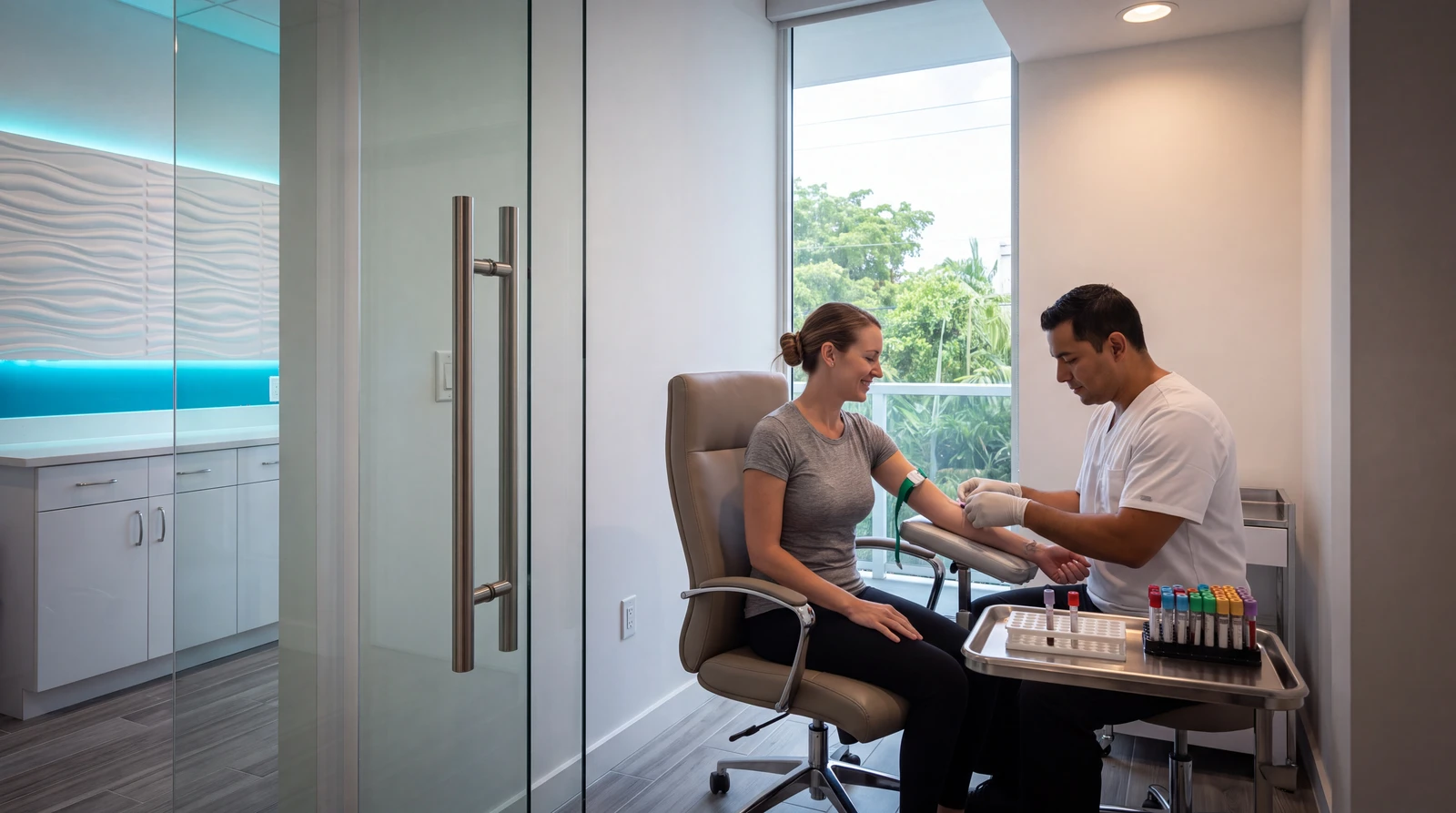
Prescribed peptide therapy starts with a clinician and ends with a follow-up lab result. At Rewind, the process runs like this.
1. A consultation about your goal
Peptides are chosen for a goal: recovery from an injury, sleep and body composition, or support for age-related growth hormone decline. The first conversation covers your goals, your health history, past injuries and what you have already tried, including any peptides you have used on your own.
2. Baseline bloodwork before anything is prescribed
We require baseline labs before prescribing any peptide. For growth hormone peptides such as sermorelin, CJC-1295 and ipamorelin, that includes IGF-1, the main blood marker of growth hormone activity, along with a comprehensive metabolic panel and other markers relevant to you. That baseline is what later results are measured against.
3. A prescription matched to your labs
Based on your results and goals, the clinical team selects the peptide or combination, the dose, the schedule and how long the course should run. The prescription is written for you by name.
4. A licensed compounding pharmacy
Rewind’s peptides are sourced from licensed compounding pharmacies that meet USP standards. A pharmacy fills the prescription, which means a licensed pharmacist is responsible for what is dispensed.
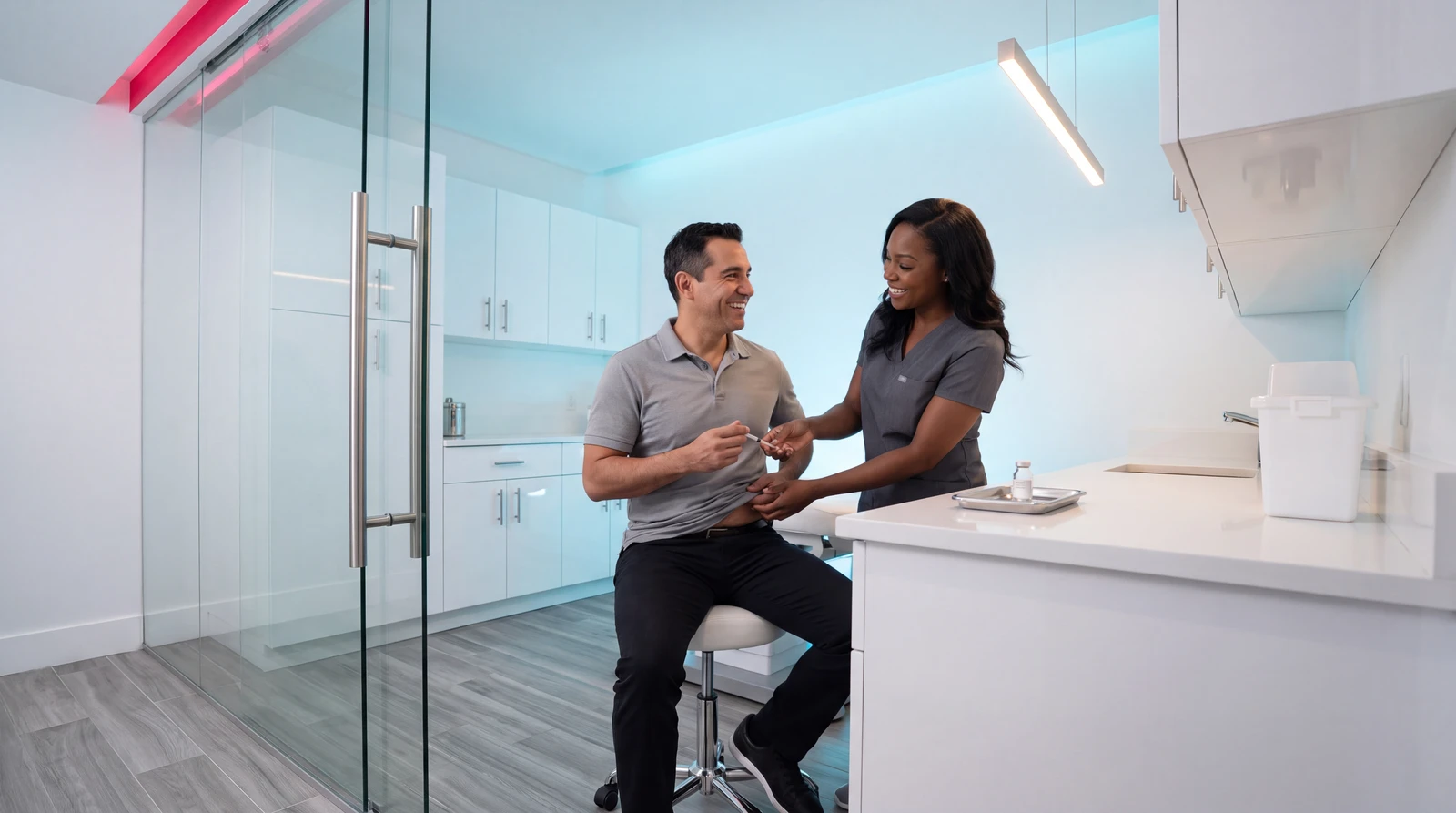
5. Injection training
Most peptides are given as a small subcutaneous injection. We teach you the technique so you can do it at home with confidence.
6. Follow-up labs and adjustment
Follow-up bloodwork at 8 to 12 weeks shows whether the protocol is working. Doses are adjusted based on your results and how you feel, and follow-up visits can be done by telehealth.
Research peptides vs prescribed peptides, side by side
| Research peptides | Prescribed peptides at a clinic | |
|---|---|---|
| Who decides you should take it | You | A clinician, after an evaluation |
| Labs before starting | None | Baseline panel, including IGF-1 for growth hormone peptides |
| Where it comes from | A chemical supplier | A licensed compounding pharmacy |
| Label | ”Research use only, not for human consumption” | A prescription in your name |
| Dose | Chosen from online sources | Set by your provider and adjusted to your labs |
| Monitoring | None | Follow-up labs at 8 to 12 weeks |
| Who answers when you have a question | No one | Your clinical team |
What prescribed peptide therapy can do for you
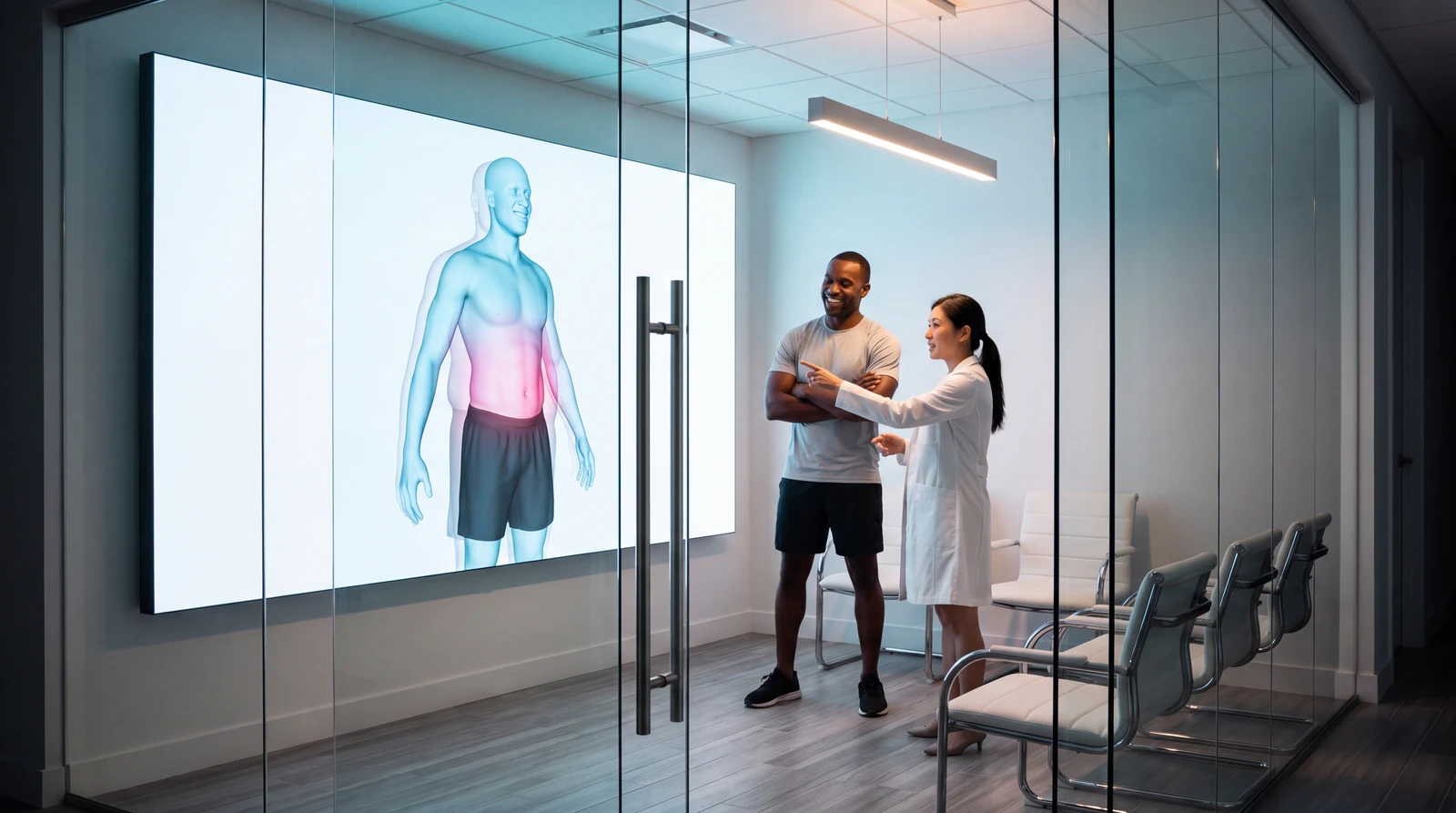
The reason to pay for a supervised protocol is the result. Peptides are chosen for a goal, and progress is measured against the baseline you started with.
- Sleep and recovery. Growth hormone peptides such as sermorelin and the CJC-1295 and ipamorelin combination often improve sleep quality first. Many patients notice deeper sleep and better recovery within two to four weeks.
- Body composition. Changes in body fat, particularly around the middle, and in lean muscle build more slowly and usually become visible over two to three months. A body composition scan shows the change in numbers, not only in the mirror.
- Healing and recovery from injury. For tissue repair, protocols are shorter and targeted, typically four to eight weeks for an acute injury.
- Full optimization usually takes three to six months, with follow-up labs confirming the response along the way.
Because the protocol is measured, you know whether it is working. That is something a research-peptide purchase cannot tell you at any price.
Why the price is different
When you compare a research-peptide price with a clinic price, you are comparing a vial with a program. The clinic price covers the evaluation, the lab work, the prescription, a pharmacy-dispensed product, training, and the follow-up bloodwork and visits that tell you whether it is working.
That is also where the value is. Choosing the right peptide for the goal, checking the dose against your labs and measuring the result are what make a protocol work, and they are exactly the parts a research-peptide purchase leaves out.
A fair way to compare two options is to ask each one the same questions:
- Who reviews my history and labs before I start?
- Which pharmacy fills it, and is it licensed?
- When is my follow-up bloodwork, and what does it measure?
- Who adjusts my dose, and how do I reach them?
A clinic should answer all four without hesitating. A research-peptide seller cannot answer any of them.
If you are already using research peptides
Many people who come to us have tried peptides on their own first. That is useful information, not a problem. Tell your provider what you used, for how long and at what dose. It helps the team read your baseline labs correctly and decide where to start with a prescribed protocol. If you still have the vials or the product names, bring them, so your provider can see exactly what you were taking.
Peptide therapy in Miami at Rewind
Rewind Anti-Aging of Miami offers physician-led peptide therapy in Miami from our clinic at 24 NW 29th Street in Wynwood. Every protocol starts with bloodwork, is matched to your goal, and is followed with repeat labs. Follow-up visits can be done by telehealth. If you want to know what peptide therapy can do for you, and what it would involve, book a consultation or call (305) 922-9622. For background on the peptides themselves, start with what peptide therapy is and how it works.
Frequently Asked Questions
What is the difference between research peptides and prescribed peptides?
Research peptides are sold online as laboratory chemicals, labeled for research use only and not for human consumption. Prescribed peptides are dispensed by a licensed compounding pharmacy against a prescription written for you by a clinician who has reviewed your history and bloodwork, and who follows your response with repeat labs.
Why do peptides from a clinic cost more than research peptides?
Because the clinic price covers more than the vial: a clinical evaluation, baseline labs including IGF-1, a prescription filled by a licensed pharmacy, dosing and injection training, and follow-up bloodwork at 8 to 12 weeks with dose adjustments. A research-peptide website sells only the powder.
Should I tell my provider if I have used research peptides?
Yes. Tell your provider what you used, for how long and at what dose. It helps the clinical team read your baseline labs correctly and decide where a prescribed protocol should start.
Where can I get peptide therapy in Miami?
At Rewind Anti-Aging of Miami, 24 NW 29th Street in Wynwood, Miami, FL 33127, open Monday to Friday, 10 AM to 6 PM. Book a consultation online or call (305) 922-9622. Follow-up visits for peptide therapy can also be done by telehealth.
More in peptides
HGH vs Peptides: What Each One Actually Delivers
HGH vs peptides is not a preference — US law restricts growth hormone to three adult indications. Here is what peptide secretagogues deliver instead.
peptidesMOTS-c Peptide: What the Evidence Shows in 2026
The MOTS-c peptide moved a step closer to legitimate compounding in 2026. Here is what the mitochondrial peptide does, what the evidence supports, and what it does not.
peptidesThymulin Peptide Therapy: Immune Support and the Evidence
Thymulin peptide therapy targets age-related thymic decline and immune function. Here is the biology, the zinc connection, and what the human evidence supports.
⚕ Medical Disclaimer
The information on this page is for educational purposes only and does not constitute medical advice, diagnosis, or treatment. All treatments at Rewind Anti-Aging of Miami are performed under the supervision of licensed medical professionals. Individual results may vary. Consult your physician before beginning any new treatment protocol.
Meet our clinical team →Not sure which treatment is right for you?
Take our free 2-minute assessment and get a personalized recommendation.
Areas We Serve in Miami & South Florida
Our clinic at 24 NW 29th Street is in Wynwood & Midtown, minutes from Edgewater and Brickell. We also care for patients across Coral Gables, Aventura, Key Biscayne, and Doral — plus the entire state of Florida via telehealth.
Take the Next Step
Our team at Rewind Anti-Aging in Miami is here to help you determine if peptide therapy is right for your goals.