
Most people who ask about peptides have already done some reading. They have heard about sermorelin for sleep and recovery, BPC-157 for an injury that will not heal, or a peptide stack a friend swears by. What they usually have not seen is what actually happens between deciding to try it and the first injection.
This is the path to starting peptide therapy in Miami at Rewind Anti-Aging of Miami, from the first conversation to the first follow-up labs. At every step the rule is the same: nothing is prescribed without lab work behind it.
What peptide therapy is used for
Peptides are short chains of amino acids that act as signals, telling the body to release a hormone, repair tissue or calm inflammation. At Rewind, peptides are prescribed for three main goals.
| Goal | Peptides | How they are given |
|---|---|---|
| Growth hormone, sleep and recovery | Sermorelin; CJC-1295 with ipamorelin | Small injection, usually at night |
| Visceral fat and body composition | Tesamorelin | Daily injection |
| Injury and tissue repair | BPC-157, TB-500 | Injection; BPC-157 also as capsules for the gut |
The growth hormone peptides do not replace growth hormone. They prompt your own pituitary gland to release more of it, in the natural pulses your body already uses, which keeps its feedback controls in place (1). CJC-1295 with ipamorelin is the combination Rewind prescribes most often. CJC-1295 keeps growth hormone and IGF-1 raised for days after a dose (2), and ipamorelin works through a different receptor, so together they give a stronger, steadier release than either alone. Our guide to what peptide therapy is explains each one in more depth.
Step 1: The consultation
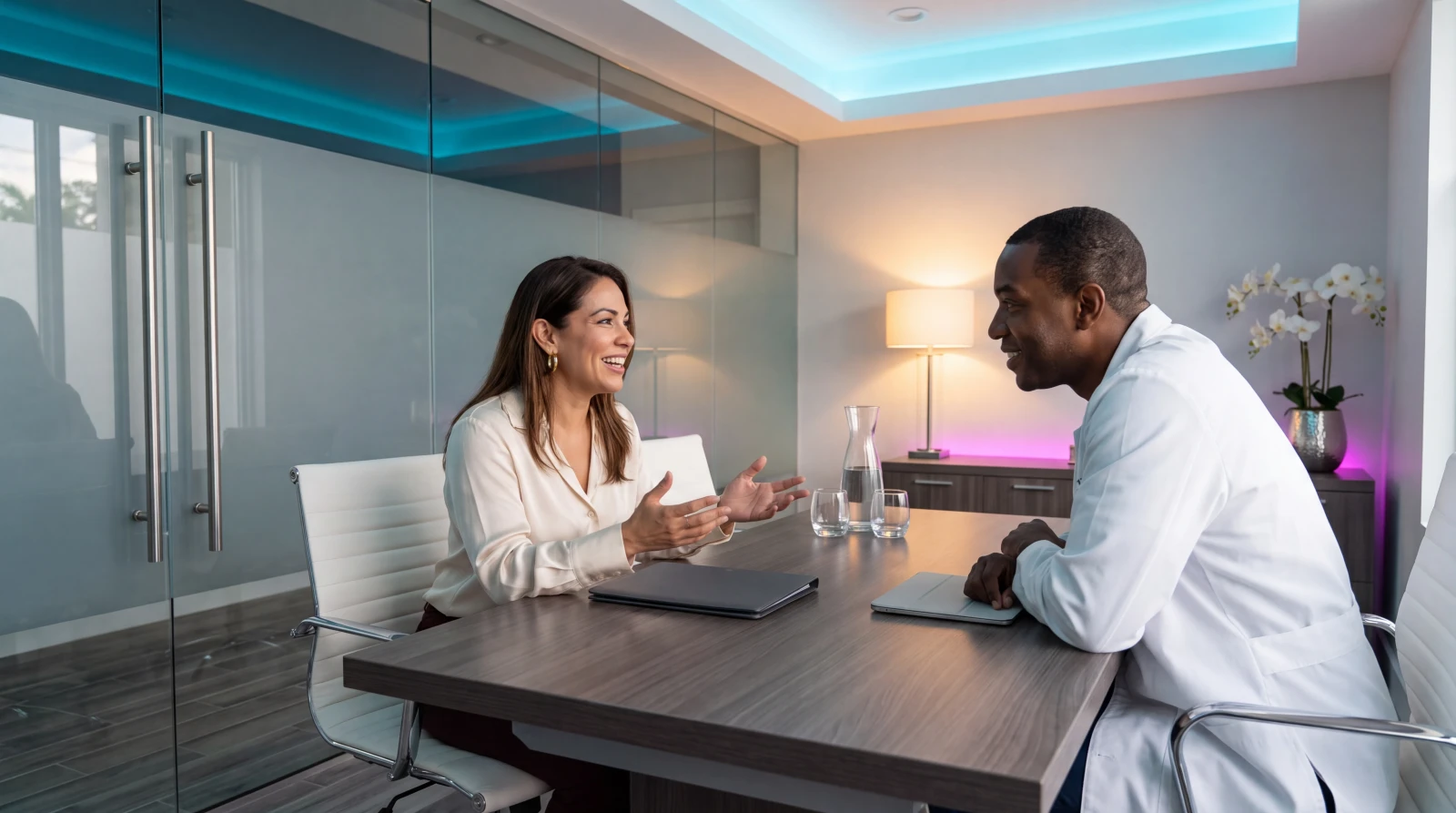
Your provider starts with what you want to change: sleep, recovery, body fat, an injury, energy, or how you are ageing overall. The conversation covers your medical history, medications, training and any hormone therapy you already take, because peptides are often part of a wider plan.
It also covers who should not take them. Growth hormone peptides are not prescribed to anyone with active cancer or a history of cancer, during pregnancy or breastfeeding, or with uncontrolled diabetes.
Your first conversation with us is free: 30 minutes to talk through your goals, by video or in our Wynwood office.
Step 2: Baseline labs
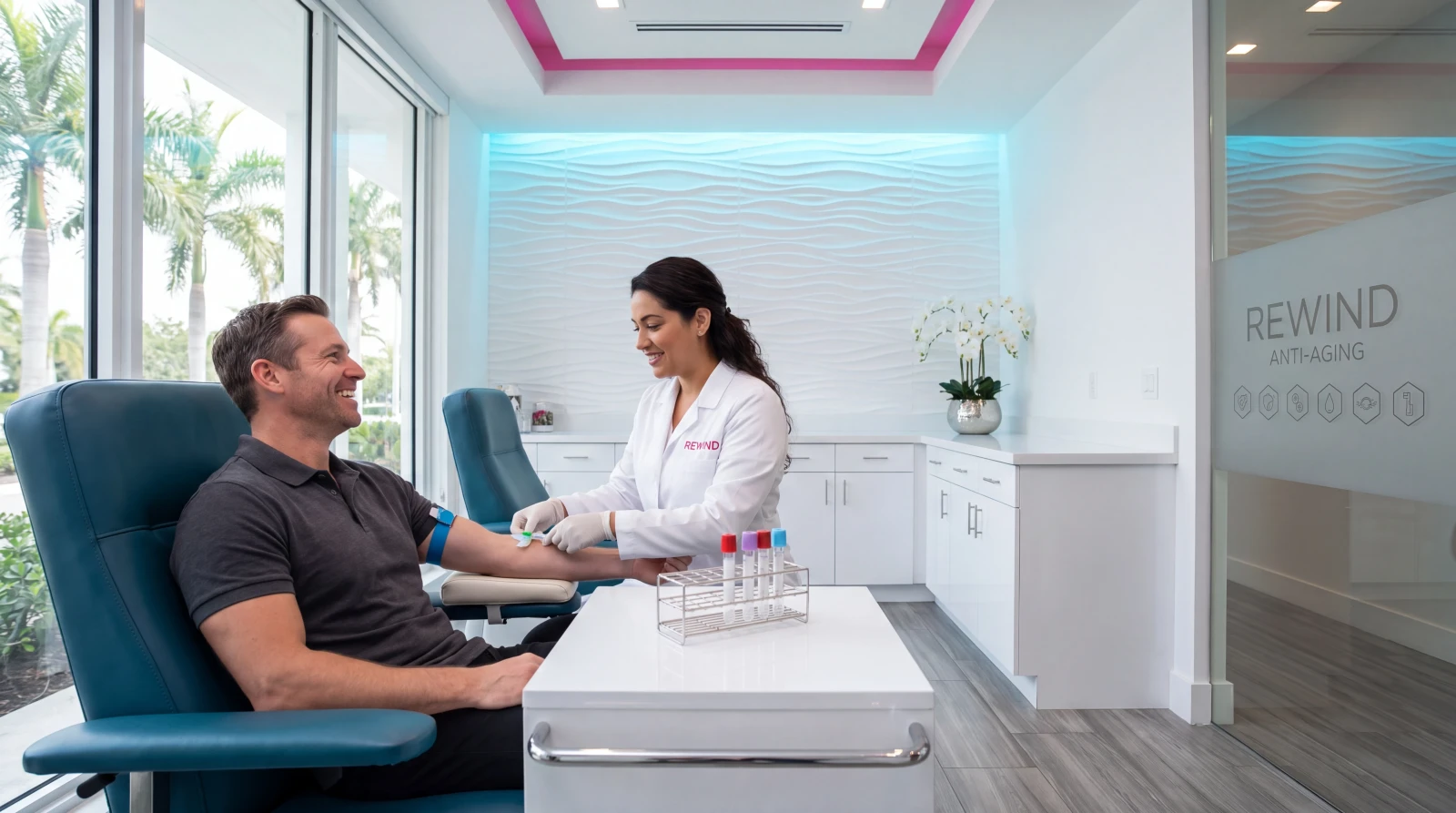
Before anything is prescribed, a blood draw sets your baseline. The key marker is IGF-1, which reflects your growth hormone status and is the number that later shows whether a growth hormone peptide is working. The panel also includes a comprehensive metabolic panel and the other markers relevant to your goals. Fast for 8 to 12 hours beforehand; water is fine. If you have recent lab work from another doctor, bring it: it is useful context, though the baseline that matters is the one your follow-up labs will be compared against.
Step 3: Your protocol
Your provider matches the peptide, or combination, to your goals and your results, and sets the dose, the schedule and how long the first cycle will last. A growth hormone protocol typically runs in cycles of 3 to 6 months. BPC-157 for an acute injury is often 4 to 8 weeks.
Peptides are prescribed in your name and sourced from licensed compounding pharmacies that meet USP standards.
Step 4: Injection training
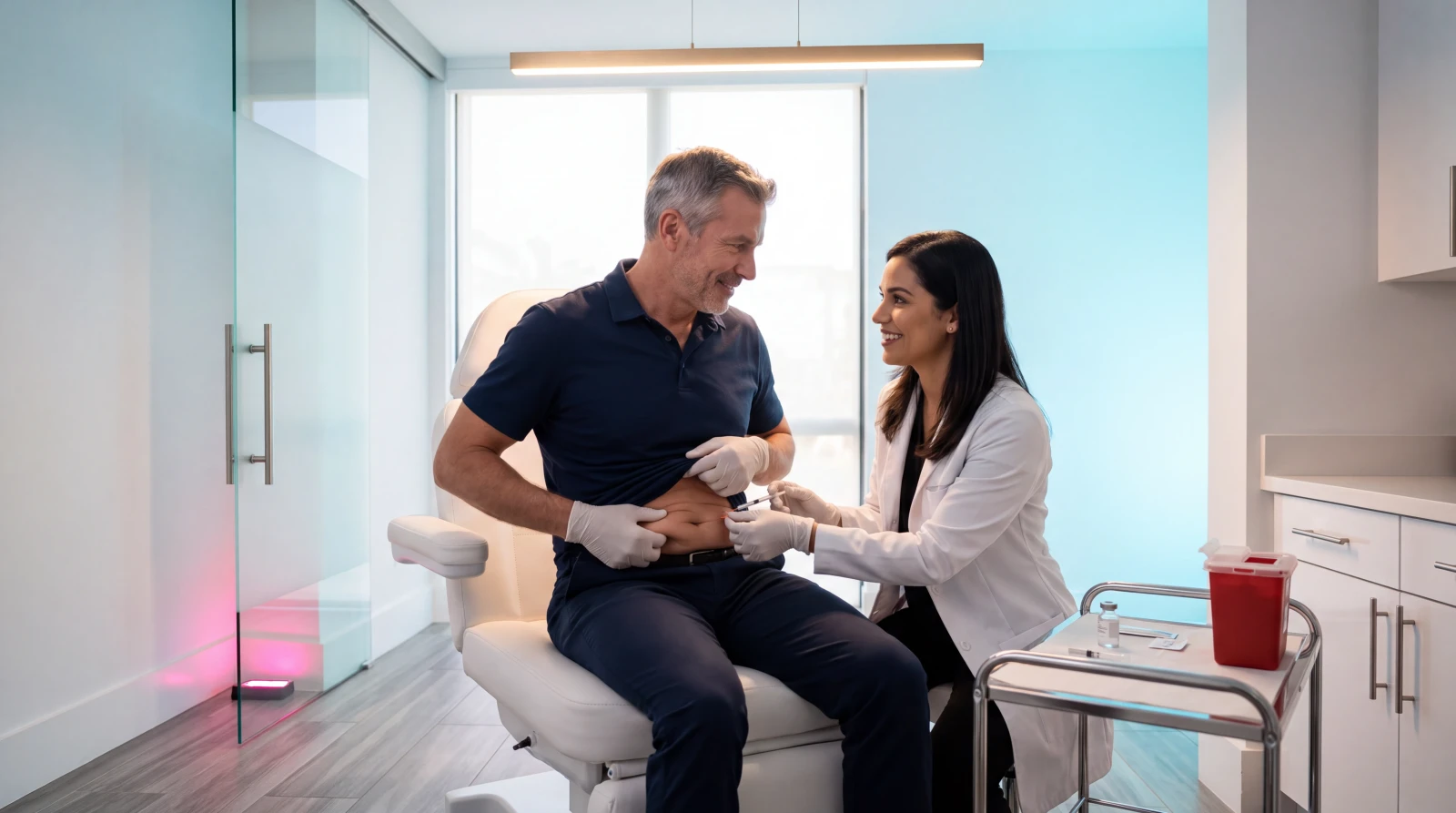
Most peptides are given as a subcutaneous injection: a very small needle into the fat just under the skin, like an insulin injection. It takes seconds and most people find it close to painless. Our team shows you how to prepare and give the injection before your first dose at home, and how to store the medication. BPC-157 for gut symptoms can be taken as capsules instead.
Step 5: Follow-up labs and adjustment
Follow-up labs at 8 to 12 weeks show how you have responded, and your provider adjusts the dose or the protocol to your results and how you feel. Follow-up visits for peptide therapy can be done by telehealth, so after the first visit you only need to come in when it helps.
What the first month feels like
The first week is mostly routine: learning the injection, finding the time of day that suits you, usually at bedtime for the growth hormone peptides. There is little to feel yet.
From the second week, sleep is where most people notice a change first. It tends to get deeper, and waking up feels less like hard work. Recovery after training often follows.
Side effects at prescribed doses are usually mild and short-lived: some redness or itching where you inject, a little water retention in the first weeks, tingling in the hands, or more appetite with ipamorelin. Most settle on their own or with a dose adjustment, which is one reason the protocol is reviewed rather than left to run. If something does not feel right, contact our team rather than waiting for your follow-up.
What results to expect, and when
- Sleep and energy: growth hormone peptides usually improve sleep within 2 to 4 weeks. It is often the first thing people notice.
- Body composition: less body fat, especially around the middle, and more lean muscle become visible at 2 to 3 months.
- Injuries: BPC-157 can help within 1 to 2 weeks for an acute injury.
- Full effect: 3 to 6 months.
For what those changes look like in practice, see sermorelin before and after.
Combining peptides with hormone therapy
Peptides and hormone therapy work well together. Hormone therapy brings testosterone, estrogen or thyroid to where you feel your best; peptides add growth hormone support, recovery and repair on top. Many Rewind patients use both. Our guides to sermorelin and ipamorelin and peptide therapy stacks cover the combinations people ask about most.
One thing to know if you compete: peptides do not show up on standard workplace drug tests, but they are banned by WADA and most sports bodies. Tell your provider if you are tested.
Questions to ask any Miami peptide clinic

- Do you test IGF-1 and a metabolic panel before prescribing?
- Which peptide are you recommending for my goal, and why that one?
- Is the prescription in my name, and which licensed pharmacy fills it?
- When are my follow-up labs, and what will they check?
- Who do I contact between visits if I have a question about a dose?
Cost and insurance
Rewind does not accept insurance. Costs are discussed during your consultation, so you know what your protocol includes before you start.
Peptide therapy in Miami at Rewind
Rewind Anti-Aging of Miami is a physician-led practice at 24 NW 29th Street in Wynwood, open Monday to Friday, 10 AM to 6 PM. We provide peptide therapy in Miami guided by baseline and follow-up labs, including sermorelin, CJC-1295 with ipamorelin, tesamorelin and BPC-157. Patients come to us from Brickell, Edgewater, Miami Beach, Coral Gables, Coconut Grove, Doral and Aventura, and from across Florida by telehealth. Book a discovery call or call (305) 922-9622.
Sources
- Sigalos JT, Pastuszak AW. The Safety and Efficacy of Growth Hormone Secretagogues. Sexual Medicine Reviews. 2018;6(1):45-53. PMID: 28400207. DOI: 10.1016/j.sxmr.2017.02.004
- Teichman SL, Neale A, Lawrence B, et al. Prolonged stimulation of growth hormone (GH) and insulin-like growth factor I secretion by CJC-1295, a long-acting analog of GH-releasing hormone, in healthy adults. The Journal of Clinical Endocrinology & Metabolism. 2006;91(3):799-805. PMID: 16352683. DOI: 10.1210/jc.2005-1536
Frequently Asked Questions
Do I need blood work before starting peptide therapy?
Yes. Rewind runs baseline labs before prescribing any peptide, including IGF-1, the main marker of growth hormone status, and a comprehensive metabolic panel. Follow-up labs at 8 to 12 weeks confirm the protocol is working.
How soon will I see results from peptide therapy?
Growth hormone peptides such as sermorelin and CJC-1295 with ipamorelin usually improve sleep and energy within 2 to 4 weeks, with visible body composition changes at 2 to 3 months. BPC-157 for an injury can help within 1 to 2 weeks. Full results take 3 to 6 months.
Are peptide injections painful?
Most people find them close to painless. Peptides are given with a very small needle into the fat just under the skin, like an insulin injection, and our team trains you in the technique before your first dose at home.
Can I do peptide therapy follow-ups by telehealth?
Yes. After your first visit, follow-up visits for peptide therapy can be done by telehealth, and your follow-up labs can be scheduled around them.
Where can I get peptide therapy in Miami?
At Rewind Anti-Aging of Miami, 24 NW 29th Street in Wynwood, Miami, FL 33127, open Monday to Friday, 10 AM to 6 PM. Book online or call (305) 922-9622.
More in peptides
HGH vs Peptides: What Each One Actually Delivers
HGH vs peptides is not a preference — US law restricts growth hormone to three adult indications. Here is what peptide secretagogues deliver instead.
peptidesResearch Peptides vs Prescribed Peptides: What a Miami Clinic Adds
Research peptides vs prescribed peptides: what you get from a Miami clinic, including labs, a prescription, a licensed pharmacy and follow-up, and why it costs more.
peptidesMOTS-c Peptide: What the Evidence Shows in 2026
The MOTS-c peptide moved a step closer to legitimate compounding in 2026. Here is what the mitochondrial peptide does, what the evidence supports, and what it does not.
⚕ Medical Disclaimer
The information on this page is for educational purposes only and does not constitute medical advice, diagnosis, or treatment. All treatments at Rewind Anti-Aging of Miami are performed under the supervision of licensed medical professionals. Individual results may vary. Consult your physician before beginning any new treatment protocol.
Meet our clinical team →Not sure which treatment is right for you?
Take our free 2-minute assessment and get a personalized recommendation.
Areas We Serve in Miami & South Florida
Our clinic at 24 NW 29th Street is in Wynwood & Midtown, minutes from Edgewater and Brickell. We also care for patients across Coral Gables, Aventura, Key Biscayne, and Doral — plus the entire state of Florida via telehealth.
Take the Next Step
Our team at Rewind Anti-Aging in Miami is here to help you determine if peptide therapy is right for your goals.