

Thymulin peptide therapy is marketed on a simple and largely accurate premise: your thymus shrinks as you age, it makes less of a hormone called thymulin, and your immune system gets worse. Replace the hormone, restore the function.
The first three parts of that are well established. The fourth has not been demonstrated in humans, and there is a cheaper, better-evidenced explanation for low thymulin activity that most discussions skip entirely.
This article covers what thymulin is, why the zinc connection changes the clinical picture, what the research does and does not show, how it compares to the better-studied thymic peptide, and how we approach it.
First, the Spelling
You will see this compound written as thymullin with a double L across peptide retail sites and forums. The correct spelling is thymulin, one L. It is also called facteur thymique sérique (FTS), after the French group that first isolated and characterized it in the 1970s (1).
Same molecule, two spellings. We mention it because the misspelling is common enough that it affects what you find when you search, and because a vendor who cannot spell the compound is telling you something about their sourcing.
What Thymulin Is
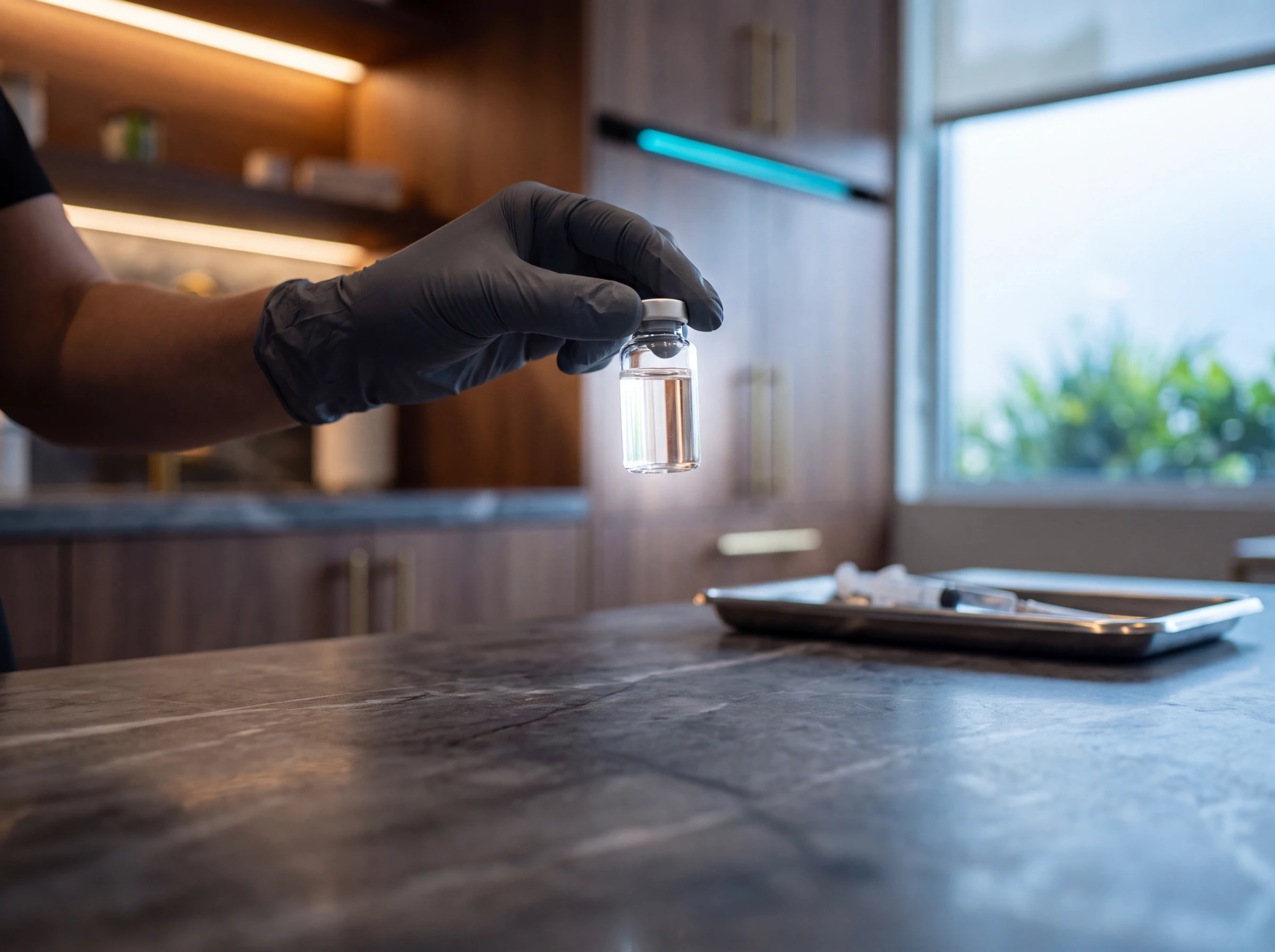
Thymulin is a nonapeptide — a chain of nine amino acids — produced by thymic epithelial cells in the thymus, the small gland sitting behind the sternum where T-cells mature.
Its known role is in T-cell development: supporting the maturation and differentiation of T-cell precursors into functional cells capable of recognizing pathogens and abnormal cells. It also interacts with neuroendocrine signaling pathways, and animal work has examined it in the context of inflammation and pain modulation as well as immunity (6)(7).
One feature separates thymulin from most peptides discussed in longevity medicine, and it is the most clinically useful thing in this article.
The Zinc Dependency
Thymulin is biologically inactive unless it is bound to a zinc ion.
This was established in the early 1980s: the peptide’s activity depends on zinc coordination, and removing zinc abolishes it (2). The molecule without its zinc is still there and still measurable by some assays — it simply does not work.
The implication is significant. Low thymulin activity can arise two different ways:
- The thymus is producing less of it — the age-related mechanism the therapy is built around.
- Zinc status is inadequate, so the thymulin being produced circulates inactive.
These look similar and are not the same problem. Zinc deficiency and marginal zinc status are common in older adults, and research has shown that zinc repletion can restore measurable thymulin activity in people with low levels (3)(5). Zinc’s broader role in immune function — T-cell development, thymic size, and immune response — is well documented (3).
So before considering an investigational peptide, there is an obvious question: has anyone checked your zinc?
In our practice, that is not a rhetorical point. It is a lab. Zinc, along with vitamin D and inflammatory markers, is part of the workup we run before any conversation about thymic peptides, and it resolves the question often enough to be worth doing first. Our comprehensive lab panel includes the relevant micronutrient and inflammatory markers.
Thymic Involution: The Problem Being Targeted
The underlying premise is sound and worth understanding on its own.
The thymus is one of the first organs to age. It begins involuting — shrinking, with functional tissue progressively replaced by fat — from around puberty, and the decline continues steadily through adult life (4). By later adulthood, the majority of functional thymic tissue is gone.
The consequence is a drop in naive T-cell output. Naive T-cells are the ones that have not yet encountered a specific pathogen; they are the immune system’s capacity to respond to something new. Memory T-cells accumulate over a lifetime, but the ability to mount a fresh response against an unfamiliar threat depends on continued thymic output.
This contributes to immunosenescence, the broad age-related decline in immune competence that is associated with reduced vaccine responses, slower recovery from infection, and increased susceptibility in older adults (4). Thymulin levels fall in parallel with thymic mass, which is why thymic peptides became an area of interest.
None of that is controversial. The controversial step is the one from “thymulin falls with age” to “administering thymulin restores immune function in people.”
What the Evidence Shows

Preclinical work is substantial
The animal and laboratory literature is genuinely developed.
Thymulin has been studied in rodent models of inflammation, where it reduced inflammatory hyperalgesia and modulated proinflammatory cytokine concentrations (6). Groups working on the thymus-neuroendocrine axis have explored thymulin gene therapy in mice, reporting effects on immune and endocrine parameters (7). The basic biology — synthesis, zinc dependence, receptor interactions, T-cell effects — is well characterized after five decades of work.
Human clinical evidence is essentially absent
There are no published randomized controlled trials of thymulin administration in humans for immune support, longevity, or infection resistance.
That is the whole finding, and it should be weighted accordingly. The gap is not “small trials with mixed results.” It is an absence of the trials.
What this means practically:
- No established human dose. Any protocol in circulation is derived from animal work or vendor convention.
- No demonstrated clinical outcome. Nothing shows that people given thymulin get sick less often, recover faster, or respond better to vaccination.
- No human safety dataset. Short-term tolerability appears acceptable in clinical use, but tolerability observed informally is not a safety profile.
We describe thymulin as investigational because that is the accurate word, not as a hedge. The same reasoning applies across most of the category — our overview of what peptide therapy is covers why the evidence gap is structural rather than specific to this compound.
Thymulin vs Thymosin Alpha-1
If your goal is immune support and you are choosing on evidence, this comparison matters more than anything else in the article.
Thymosin alpha-1 is a different thymic peptide, 28 amino acids, and it has a substantially stronger clinical record. It has been evaluated in human trials, and is approved in a number of countries outside the United States for indications including chronic hepatitis B, with additional research in immune-compromised populations (8).
| Thymulin | Thymosin alpha-1 | |
|---|---|---|
| Length | 9 amino acids | 28 amino acids |
| Zinc required for activity | Yes | No |
| Human clinical trials | Not published | Multiple |
| Approved anywhere | No | Yes, in several countries (not the US) |
| US FDA approval | No | No |
Neither is FDA-approved in the United States, and both face the same compounding constraints described below. But “no US approval, substantial international human data” and “no US approval, no human data” are different positions, and a patient deciding between them deserves to know which is which.
The two are routinely conflated on retail sites and sometimes even in clinic marketing. They are not interchangeable.
Regulatory Status and Access
Thymulin has no FDA approval for any human indication, and there is no standardized commercial product. The practical consequences are the ones that follow from that everywhere in this category: no quality-controlled manufacturing, no label, no established dose, and wide variation between what different suppliers sell under the same name.
Access in the United States runs through compounding, and the FDA’s evaluation of bulk drug substances nominated for compounding has narrowed what is legitimately available for several thymic and repair peptides. Our article on the legal and FDA status of peptide therapy explains how those lists work and why the landscape changed.
Grey-market sourcing carries its own risk, independent of the molecule. Independent testing of research-chemical peptides has repeatedly found underdosed, degraded, or mislabeled products. Whatever uncertainty thymulin itself carries, an unverified vial adds a second layer.
Safety Considerations
Reported effects in clinical use are mild — most commonly minor injection site reactions such as redness or brief soreness.
The honest framing is that thymulin’s short-term tolerability appears unremarkable and its long-term safety is unstudied. There is no signal of serious harm, and there is also no dataset in which such a signal could have appeared.
Two situations warrant particular caution:
- Autoimmune disease. A compound intended to modulate T-cell function is not obviously neutral in a condition driven by T-cell dysregulation. This needs individual clinical judgment, not a general rule.
- Immunosuppressive therapy. Anyone on immunosuppressants, including transplant recipients and people on biologics, should not add an immune-modulating peptide without their treating specialist involved.
Immune Aging Is More Than One Hormone

Thymic decline is real, but it is one component of a broader picture, and understanding the rest explains why a single peptide is unlikely to be the answer.
Naive T-cell depletion. The thymic mechanism described above — less capacity to respond to genuinely novel threats, while memory responses to familiar ones remain comparatively intact (4).
Inflammaging. A chronic, low-grade elevation in inflammatory signaling that develops with age. It is associated with visceral adiposity, poor metabolic health, and disrupted sleep — all of which are modifiable, and none of which respond to a thymic peptide. Measured with hs-CRP, it is one of the more actionable markers on a panel.
Reduced vaccine response. A practical, measurable consequence of the above, and one of the few places where immune aging shows up as something you can actually observe.
Micronutrient status. Zinc, as discussed. Also vitamin D, which has well-documented roles in immune signaling and is commonly insufficient even in sunny climates.
The reason this matters for anyone considering thymulin: several items on that list have interventions with real evidence behind them, and thymulin does not address most of them. Resistance training, adequate protein, correcting metabolic dysfunction, treating sleep apnea, and repleting deficient micronutrients all affect immune function through documented pathways. None of them are exciting. All of them are better supported than any thymic peptide currently available.
What to Measure First
If reduced immune resilience is the actual concern, these are the markers worth having before any peptide conversation:
| Marker | What it tells you |
|---|---|
| Serum zinc | Whether the thymulin you already produce is active |
| Vitamin D (25-OH) | A well-documented immune cofactor, commonly low |
| hs-CRP | Chronic inflammatory burden |
| CBC with differential | Lymphocyte counts, neutrophil-lymphocyte ratio |
| HbA1c, fasting insulin | Metabolic dysfunction suppresses immune function |
| Ferritin, iron studies | Deficiency impairs immune cell proliferation |
| TSH, free T4 | Thyroid contribution to fatigue and recovery |
Recurrent infections and slow recovery are the symptoms that bring people to thymic peptides. In practice, they are far more often explained by something on this list than by thymic output — and the items on this list are testable, correctable, and inexpensive.
How Rewind Approaches Thymulin
Our sequence is deliberately conservative, and it puts thymulin late rather than early.
1. Test first. Zinc, vitamin D, hs-CRP, a full CBC with differential, and thyroid and metabolic markers. Recurrent infections and poor recovery have common causes that are cheaper and better evidenced to correct than a thymic peptide — including uncontrolled blood sugar, iron deficiency, poor sleep, and low zinc.
2. Correct what is correctable. If zinc is low, repletion is the intervention with actual evidence behind it, and it may restore thymulin activity directly.
3. Address the foundations. Sleep, resistance training, protein intake, and metabolic health all influence immune function, and all have better support than any peptide in this category.
4. Only then discuss peptides — and in that conversation, we will tell you that thymosin alpha-1 has the stronger human record, that thymulin’s evidence is preclinical, and what the access constraints are.
That ordering costs us peptide revenue, and we think it is the correct clinical sequence. The thymulin service page describes how our clinical team evaluates candidacy, and our peptide therapy overview places it alongside options with better-established evidence. For the broader question of what actually moves biological aging, our article on how to slow biological aging is a more useful starting point than any single compound.
The Bottom Line
Thymulin is a real hormone with a well-described biology, a genuine and interesting zinc dependency, and a plausible rationale for use in age-related immune decline. It also has no controlled human trials behind it, no FDA approval, no established dose, and a better-studied sibling compound in thymosin alpha-1.
The most valuable thing this article can leave you with is not a verdict on the peptide. It is the zinc question — because a meaningful share of people looking at thymulin for immune support have a micronutrient problem that is measurable, correctable, and considerably better evidenced than the therapy they came in asking about.
Get the labs first. Then decide.
This article is for educational purposes and is not medical advice. Thymulin is not approved by the FDA for any human indication, and its use is investigational. Do not begin any peptide therapy, or supplement with zinc at therapeutic doses, without the guidance of a qualified clinician who knows your full medical history.
References
- Bach JF, Dardenne M, Pléau JM, Rosa J. Biochemical characterisation of a serum thymic factor. Nature. 1977;266(5597):55-57.
- Dardenne M, Pléau JM, Nabarra B, et al. Contribution of zinc and other metals to the biological activity of the serum thymic factor. Proc Natl Acad Sci U S A. 1982;79(17):5370-5373.
- Prasad AS. Zinc in human health: effect of zinc on immune cells. Mol Med. 2008;14(5-6):353-357.
- Palmer DB. The effect of age on thymic function. Front Immunol. 2013;4:316.
- Mocchegiani E, Muzzioli M, Giacconi R. Zinc, metallothioneins, immune responses, survival and ageing. Biogerontology. 2000;1(2):133-143.
- Safieh-Garabedian B, Ochoa-Chaar CI, Poole S, et al. Thymulin reverses inflammatory hyperalgesia and modulates the increased concentration of proinflammatory cytokines induced by i.c.v. endotoxin injection. Neuroscience. 2003;121(4):865-873.
- Reggiani PC, Morel GR, Console GM, et al. The thymus-neuroendocrine axis: physiology, molecular biology, and therapeutic potential of the thymic peptide thymulin. Ann N Y Acad Sci. 2009;1153:98-106.
- Goldstein AL, Goldstein AL. From lab to bedside: emerging clinical applications of thymosin alpha 1. Expert Opin Biol Ther. 2009;9(5):593-608.
Frequently Asked Questions
Is it spelled thymulin or thymullin?
The correct clinical spelling is thymulin, with one L. It is also known as facteur thymique serique, or FTS, from the French research group that first characterized it in the 1970s. Thymullin with a double L is a common misspelling that appears widely on peptide retail sites, and both spellings refer to the same nine-amino-acid thymic hormone.
What does thymulin actually do?
Thymulin is produced by thymic epithelial cells and participates in the maturation and differentiation of T-cells — the immune cells responsible for recognizing and responding to infected or abnormal cells. It is biologically active only when bound to a zinc ion, and it also interacts with neuroendocrine signaling, which is why it is studied in contexts beyond immunity, including inflammation and pain.
Is thymulin peptide therapy FDA approved?
No. Thymulin is not approved by the FDA for any indication, and there is no standardized commercial product. That means no controlled manufacturing, no established human dose, and no label. Any use is investigational and should occur under clinician supervision.
How strong is the human evidence for thymulin?
Weak, and it is important to say so. The substantial body of research on thymulin is preclinical — cell studies, rodent models, and gene therapy work in mice. Controlled human trials of thymulin administration for immune support or longevity have not been published. The biology is well characterized; the clinical effect in people is not established.
How is thymulin different from thymosin alpha-1?
They are both thymic peptides and they are frequently confused, but their evidence bases are very different. Thymosin alpha-1 has been studied in human clinical trials and is approved in a number of countries outside the United States for specific indications such as hepatitis B. Thymulin has no comparable human trial record. If someone is deciding between them on evidence alone, thymosin alpha-1 is the better-studied compound.
Why does zinc matter so much for thymulin?
Thymulin is inactive unless it is bound to zinc. In zinc deficiency, the peptide is still produced but circulates in an inactive form, and studies have shown that zinc repletion can restore measurable thymulin activity. This is clinically important because low zinc status is common in older adults, meaning some apparent thymulin deficiency is actually a zinc problem — considerably cheaper and better evidenced to correct.
Who is thymulin considered for?
It is generally discussed for adults over 50 interested in immune resilience, particularly in the context of age-related thymic decline. In our practice it is not a first step. Testing zinc, vitamin D, and inflammatory markers, and addressing sleep and metabolic health, all have better evidence behind them and are done first.
More in peptides
MOTS-c Peptide: What the Evidence Shows in 2026
The MOTS-c peptide moved a step closer to legitimate compounding in 2026. Here is what the mitochondrial peptide does, what the evidence supports, and what it does not.
peptidesTB-500 Therapy: What the Evidence Actually Shows
TB-500 therapy is promoted for injury recovery and tissue repair. Here is what thymosin beta-4 research supports, what it does not, and the safety caveats.
peptidesBPC-157 for Tissue Repair: What the Evidence Says
BPC-157 is a synthetic peptide studied for tissue repair and recovery. Here's what the (mostly preclinical) evidence shows, plus forms and safety caveats.
⚕ Medical Disclaimer
The information on this page is for educational purposes only and does not constitute medical advice, diagnosis, or treatment. All treatments at Rewind Anti-Aging of Miami are performed under the supervision of licensed medical professionals. Individual results may vary. Consult your physician before beginning any new treatment protocol.
Meet our clinical team →Not sure which treatment is right for you?
Take our free 2-minute assessment and get a personalized recommendation.
Areas We Serve in Miami & South Florida
Our clinic at 24 NW 29th Street is in Wynwood & Midtown, minutes from Edgewater and Brickell. We also care for patients across Coral Gables, Aventura, Key Biscayne, and Doral — plus the entire state of Florida via telehealth.
Take the Next Step
Our team at Rewind Anti-Aging in Miami is here to help you determine if the Executive Lab Panel is right for your goals.