

BPC-157 is a synthetic peptide that has drawn growing interest for tissue repair and recovery, particularly around tendons, ligaments, the gut, and muscle. Short for “body protective compound-157,” it is a lab-made fragment based on a protein found in human gastric juice (1). Athletes, people recovering from injuries, and those exploring longevity protocols often ask about it. The honest answer is that the science is promising in animals but still thin in humans — so this article walks through what BPC-157 is, the proposed mechanisms, what the evidence does and does not show, the available forms, and the regulatory and safety issues that matter before anyone considers it.
What Is BPC-157?
BPC-157 is a chain of 15 amino acids derived from a larger “body protective compound” first identified in gastric juice (1)(2). It does not exist in nature in this isolated, stable form — it is synthesized in a laboratory. Researchers became interested in it because the parent protein appeared to play a protective role in the gastrointestinal tract, and the isolated peptide seemed to retain healing-related activity in experimental models.
It is important to be precise about language here. BPC-157 is often marketed as a “healing peptide,” but that framing oversells the current state of evidence. Most of what is known comes from cell-culture and rodent studies. Calling it a proven therapy would be inaccurate; calling it an actively researched compound with interesting preclinical signals is fair.
Proposed Mechanisms of Action
The most discussed mechanism for BPC-157 is the promotion of angiogenesis — the formation of new blood vessels (2)(3). Better blood supply to an injured area could, in theory, accelerate the delivery of oxygen and nutrients needed for repair. Animal studies suggest BPC-157 may upregulate growth factors and signaling pathways involved in this process, including pathways tied to vascular growth (3).
Beyond blood vessel formation, preclinical work has proposed several other effects that may contribute to tissue repair:
- Tendon and ligament healing. In rat models, BPC-157 has appeared to improve the healing of transected (cut) tendons and ligaments, possibly by influencing tendon fibroblast behavior and growth-factor receptor expression (3)(4).
- Gut protection and repair. Given its origin in gastric protein, several animal studies have examined BPC-157 in models of intestinal injury, ulcers, and inflammatory damage, where it may support mucosal healing (1)(2).
- Muscle and other soft tissue. Some rodent studies suggest a role in muscle healing after injury, though this evidence is earlier-stage and less consistent (4).
These are biologically plausible mechanisms, and they explain why BPC-157 is appealing for recovery. But plausibility is not proof. A mechanism observed in a rat tendon does not guarantee a meaningful effect in a human shoulder.
What the Evidence Actually Shows on BPC-157
This is the section that matters most, so it deserves a blunt summary: the BPC-157 evidence base is overwhelmingly animal and preclinical, with very limited human data.
The bulk of published research consists of rodent and cell studies, many from a relatively small number of research groups (2)(3). These studies have reported encouraging results across tendon, ligament, gut, and other tissue models. Replication by independent labs, large randomized human trials, and long-term outcome data are largely missing.
What does this mean in practice?
- Animal results do not automatically translate to humans. Many compounds that look impressive in rodents fail to show the same benefit, or any benefit, in people. Dosing, metabolism, and tissue biology differ.
- Human evidence is limited and low-quality. Where human reports exist, they tend to be anecdotal, uncontrolled, or very small. That is not enough to establish that BPC-157 works or is safe over time.
- We cannot quote a reliable success rate or effective dose for humans. Anyone presenting a specific human “protocol” as established science is going beyond what the data support.
None of this means BPC-157 is useless — it means the responsible position is that potential benefits in humans remain unproven. If you see it described elsewhere in absolute terms (“BPC-157 heals tendons”), treat that as marketing rather than settled medicine. To understand how peptides fit into a broader recovery and longevity approach, our overview of peptide therapy and the primer what is peptide therapy provide helpful context.
Forms and How It Is Used

BPC-157 has been studied and discussed in a few forms:
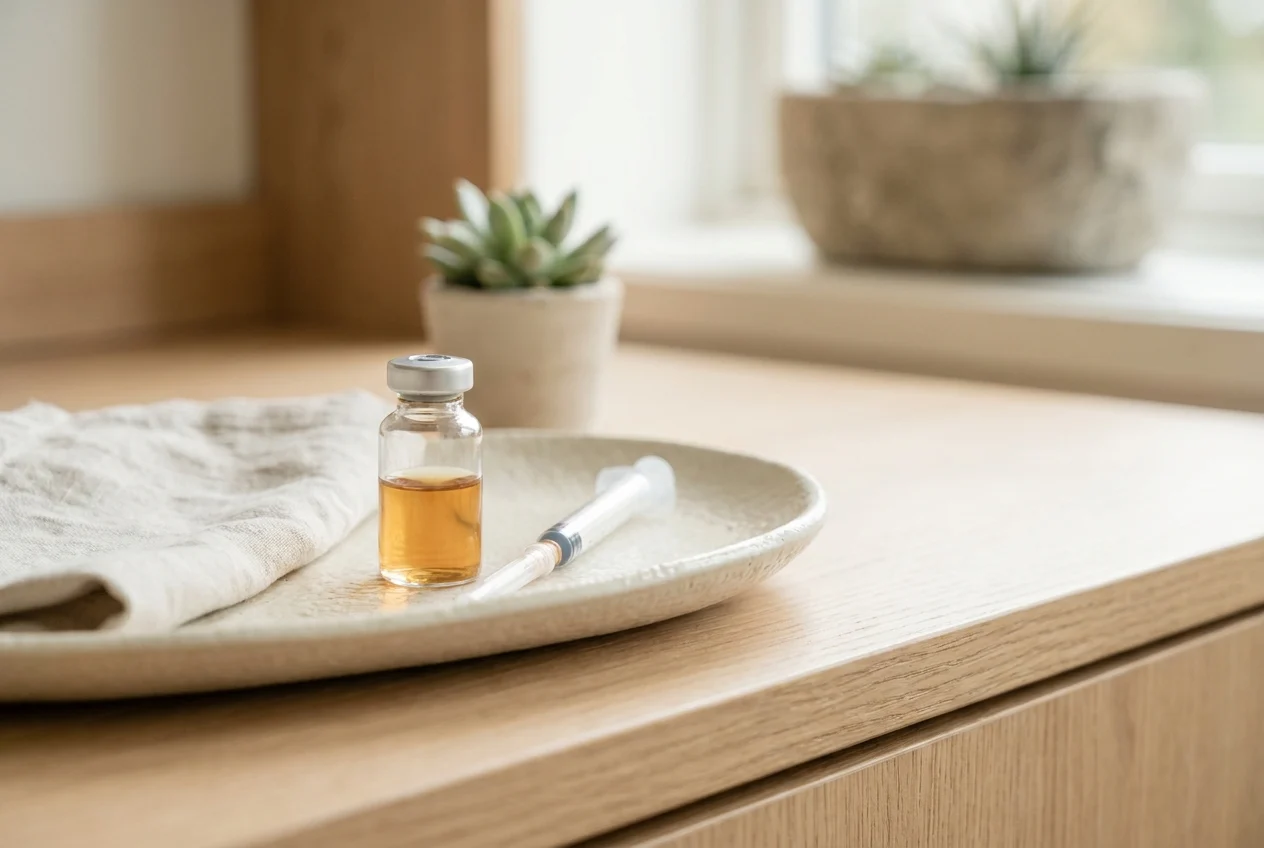
- Subcutaneous injection — the most common route in research and in clinical use where permitted, typically injected near or around the area of concern or systemically.
- Oral preparations — promoted partly because of the peptide’s gastric origin, with the theory that it may have some stability in the digestive tract; human absorption and effectiveness data are limited.
- Topical formulations — sometimes marketed for localized application, again with sparse evidence.
Because there is no FDA-approved BPC-157 product, there is no standardized, quality-controlled formulation, dose, or label. That is a meaningful problem. Two vials labeled “BPC-157” from different sources may differ in purity, actual content, and contaminants. Independent testing of research-chemical peptides has repeatedly found mislabeled or substandard products, which is why sourcing and quality matter enormously and why this is not a do-it-yourself substance.
If you are weighing growth-hormone-related options against repair-focused peptides, our comparison of sermorelin vs BPC-157 breaks down how those two very different peptides are positioned.
Regulatory Status and Safety Caveats
Here is where caution is non-negotiable.
BPC-157 is not FDA approved for any use. It has not gone through the clinical trial process required to demonstrate safety and effectiveness in humans for a specific indication. On top of that, the FDA has moved to place BPC-157 in a category that effectively removes it from the substances eligible for use in traditional pharmacy compounding, citing significant safety-related questions and insufficient data (5). This affects whether and how it can be legally compounded and obtained in the United States, and that regulatory picture can change.
On safety specifically:
- Short-term animal data look relatively reassuring, with studies generally not reporting major toxicity at the doses tested (2)(3). But animal safety is not human safety.
- Long-term human safety is essentially unknown. There is no large, controlled human dataset establishing what happens with extended use.
- Angiogenesis cuts both ways. A compound that may promote new blood vessel growth raises theoretical questions in contexts where you would not want to stimulate vascular growth (for example, certain tumors). This is a reason to involve a clinician rather than self-experiment.
- Product quality is a real risk. Unregulated peptides sold online may be impure, underdosed, overdosed, or contaminated.
The practical takeaway: BPC-157 is an investigational compound, not an approved medicine, and any consideration of it belongs in a supervised clinical setting where your history, goals, and risks can be weighed.
Should You Consider BPC-157?

If you are intrigued by the recovery research, that is reasonable — the preclinical signals are genuinely interesting. But “interesting in animals” and “right for you” are different questions. A thoughtful approach means understanding that the human evidence is limited, the regulatory status is unsettled, and quality control is not guaranteed.
The best next step is a conversation with a clinician who works with peptides and can put BPC-157 in context alongside the rest of your health picture — including approaches that are better established. At Rewind Anti-Aging of Miami, our team can review the current evidence with you, discuss whether a peptide-based recovery strategy makes sense for your situation, and help you avoid unregulated, poorly sourced products. Learn more about our approach to BPC-157 or book a peptide consult to talk it through.
Sources
- Sikiric P, et al. Stable gastric pentadecapeptide BPC 157 and its role in tissue protection and healing. Current Pharmaceutical Design.
- Seiwerth S, et al. BPC 157 and standard angiogenic growth factors. Gastrointestinal tract healing, lessons from tendon, ligament, muscle and bone healing. Current Pharmaceutical Design.
- Chang CH, et al. The promoting effect of pentadecapeptide BPC 157 on tendon healing involves tendon outgrowth, cell survival, and cell migration. Journal of Applied Physiology.
- Gwyer D, Wragg NM, Wilson SL. Gastric pentadecapeptide body protection compound BPC 157 and its role in accelerating musculoskeletal soft tissue healing. Cell and Tissue Research.
- U.S. Food and Drug Administration. Compounding and the FDA: bulk drug substances nominated for use in compounding — substances proposed for the difficult-to-compound and not-eligible categories. FDA.gov.
Medical disclaimer: This article is for general educational purposes only and is not medical advice. BPC-157 is not FDA approved; consult a qualified healthcare provider before considering any peptide.
Frequently Asked Questions
What does BPC-157 do?
In animal studies, BPC-157 appears to support tissue repair by promoting new blood vessel growth (angiogenesis) and influencing healing pathways in tendon, ligament, gut, and muscle tissue. Human evidence is limited, so any benefits in people remain unproven and should be discussed with a clinician.
Is BPC-157 FDA approved?
No. BPC-157 is not approved by the FDA for any condition. The FDA has also flagged it for removal from the list of substances eligible for use in compounded medications, which affects how and whether it can be legally compounded in the United States.
What is BPC-157 derived from?
BPC-157 (body protective compound-157) is a synthetic peptide based on a fragment of a protein found in human gastric juice. It does not occur naturally in this isolated form — it is manufactured in a lab.
Is BPC-157 safe?
Animal studies have generally reported a favorable short-term safety profile, but long-term human safety data are essentially absent. Sourcing and purity vary widely, which introduces additional risk. Use only under clinician supervision.
What forms does BPC-157 come in?
BPC-157 has been studied and used most often as a subcutaneous injection, with oral and topical preparations also discussed. Formulation, dose, and quality vary, so a clinician should guide any decision.
More in peptides
MOTS-c Peptide: What the Evidence Shows in 2026
The MOTS-c peptide moved a step closer to legitimate compounding in 2026. Here is what the mitochondrial peptide does, what the evidence supports, and what it does not.
peptidesThymulin Peptide Therapy: Immune Support and the Evidence
Thymulin peptide therapy targets age-related thymic decline and immune function. Here is the biology, the zinc connection, and what the human evidence supports.
peptidesTB-500 Therapy: What the Evidence Actually Shows
TB-500 therapy is promoted for injury recovery and tissue repair. Here is what thymosin beta-4 research supports, what it does not, and the safety caveats.
⚕ Medical Disclaimer
The information on this page is for educational purposes only and does not constitute medical advice, diagnosis, or treatment. All treatments at Rewind Anti-Aging of Miami are performed under the supervision of licensed medical professionals. Individual results may vary. Consult your physician before beginning any new treatment protocol.
Meet our clinical team →Not sure which treatment is right for you?
Take our free 2-minute assessment and get a personalized recommendation.
Areas We Serve in Miami & South Florida
Our clinic at 24 NW 29th Street is in Wynwood & Midtown, minutes from Edgewater and Brickell. We also care for patients across Coral Gables, Aventura, Key Biscayne, and Doral — plus the entire state of Florida via telehealth.
Take the Next Step
Our team at Rewind Anti-Aging in Miami is here to help you determine if peptide therapy is right for your goals.