

DHEA benefits are one of the most-searched topics in longevity medicine, and for good reason: DHEA (dehydroepiandrosterone) is a hormone your adrenal glands make in large amounts, and your body uses it as a building block — a precursor — for both testosterone and estrogen. Because it sits “upstream” of these sex hormones, DHEA is sometimes called a master or precursor hormone. The potential benefits people explore range from mood and libido to bone density and skin quality. The honest summary up front: the evidence is genuinely mixed, the effects (when they appear) tend to be modest, and DHEA is best thought of as a hormone that deserves testing and clinical oversight — not a casual over-the-counter pick-me-up.
What DHEA and DHEA-S actually are
DHEA is produced mostly by the adrenal glands, with smaller contributions from the gonads and brain. In the bloodstream, most of it circulates in a sulfated, longer-lasting form called DHEA-S (DHEA sulfate). Because DHEA-S is more stable throughout the day, it’s the form clinicians usually measure on a lab panel (1).
The reason DHEA gets the “precursor hormone” label is that the body can convert it downstream into androgens (like testosterone) and estrogens. How much it converts — and into what — varies a lot from person to person, depending on age, sex, genetics, and the activity of specific enzymes. This individual variability is part of why DHEA’s effects are hard to predict and why study results have been inconsistent (1)(2).
DHEA declines with age
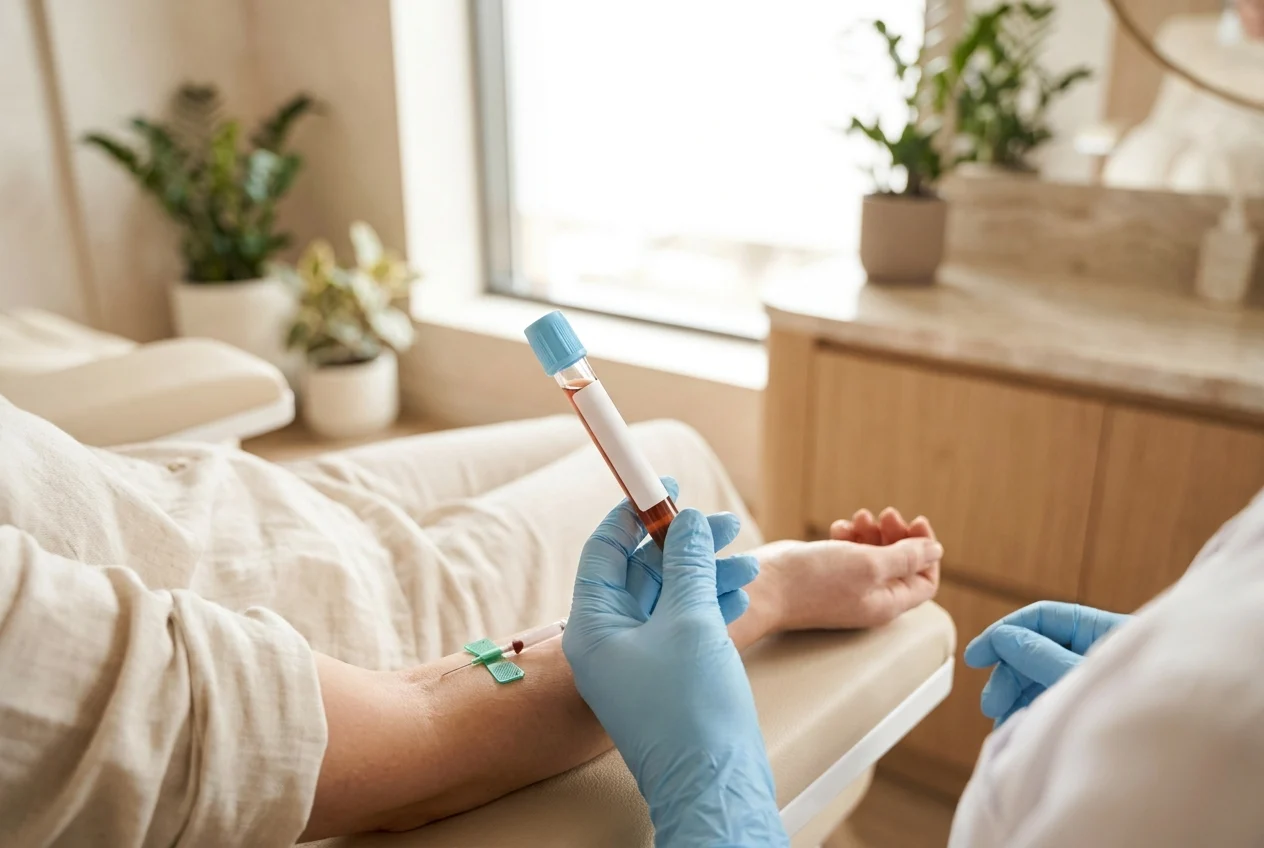
One of the most consistent findings about DHEA is that levels fall as we get older. DHEA-S typically peaks in the 20s and then declines steadily, so that by the 70s or 80s many people have only a fraction of their youthful levels (2). This age-related drop is sometimes called “adrenopause.”
That decline is what fuels interest in supplementation: if levels fall with age, the thinking goes, restoring them might restore some of what we associate with younger physiology. It’s a reasonable hypothesis — but a declining biomarker is not automatic proof that replacing it produces meaningful benefit. Much of longevity medicine lives in exactly this gap, which is why careful evaluation and diagnostic testing matter so much before acting on any single number.
DHEA benefits: where there’s some evidence
Here’s an honest tour of the areas where research has looked at DHEA, with the caveat that data quality and findings vary widely.
Mood and well-being
Some studies — particularly in older adults or people with adrenal insufficiency — have reported improvements in mood, well-being, or mild depressive symptoms with DHEA (3). Other trials have found little to no effect. The signal is strongest in people who start with low levels, and weaker or absent in those with normal levels.
Libido and sexual function
DHEA’s conversion to sex hormones makes a libido effect biologically plausible, and some research, especially in women with low DHEA, suggests possible improvements in sexual desire or function (3). Results are inconsistent, and effects appear modest where they exist.
Bone density
Because androgens and estrogens support bone, DHEA has been studied for bone health. Some trials, more often in older women, suggest small improvements in bone mineral density (2). The effect is generally modest and not a substitute for established bone-health strategies.
Skin
There is preliminary, limited evidence that DHEA may influence skin hydration, thickness, or pigmentation in older adults (2). This is one of the weaker evidence areas — interesting, but far from established.
The throughline across all of these: benefits, when reported, tend to be small, more likely in people who are genuinely low, and frequently not replicated. DHEA is not a proven cure-all, and any honest discussion of DHEA benefits has to hold the hope and the uncertainty at the same time.
Why DHEA-S levels should be tested first

This is the single most important practical point. Testing DHEA-S levels before supplementing does three things:
- Confirms whether you’re actually low. Symptoms like fatigue or low libido have many causes. A blood test tells you whether DHEA is even part of the picture.
- Guides dosing. Knowing your baseline helps a clinician choose a starting dose and avoid overshooting into supraphysiologic (above-normal) ranges, where side effects become more likely.
- Enables monitoring. Rechecking DHEA-S — and sometimes downstream hormones like testosterone or estradiol — lets you see whether a dose is doing what’s intended without pushing levels too high.
Supplementing blind, with no baseline and no follow-up, is the most common way people get into trouble with DHEA. As a hormone that feeds into your broader endocrine system, it fits naturally into a structured hormone therapy evaluation rather than a guess-and-check approach. Many over-the-counter products also vary in actual content versus label, another reason testing and clinical sourcing matter.
DHEA is a hormone, not a casual supplement
DHEA is sold over the counter in the United States, which can give the impression it’s as benign as a multivitamin. It isn’t. It’s a hormone that your body converts into other hormones, and that’s exactly why it can have real effects — and real side effects.
Potential side effects
Because DHEA converts to androgens, the most commonly reported side effects are androgenic: acne, oily skin, unwanted hair growth (hirsutism), and in some cases scalp hair thinning. Some people report irritability or sleep changes. Effects are generally more likely at higher doses and in people who are more sensitive to androgens (3).
DHEA for women
DHEA for women deserves special care. Women generally require lower doses than men, both because women have lower baseline levels and because they tend to be more sensitive to androgenic effects like acne or facial hair. DHEA can also shift the estrogen picture. For women navigating perimenopause or menopause, DHEA is one of several tools that may come up in a broader conversation — see our overview of bioidentical hormones for women for context on how these decisions are individualized.
Contraindications and cautions
DHEA is generally not recommended for people with hormone-sensitive conditions, including certain breast, ovarian, uterine, or prostate cancers, because of its conversion to estrogens and androgens. It’s also not advised during pregnancy or breastfeeding, and it may interact with other medications or affect conditions like PCOS, where androgen levels are already elevated (3). Anyone with a relevant medical history should review DHEA with a clinician before starting.
It’s also worth remembering that DHEA doesn’t act in isolation. Adrenal output is closely tied to stress physiology, and chronic stress can shift the whole hormonal cascade — our piece on how stress affects hormones explains why a low DHEA-S reading is sometimes a downstream signal of something else worth addressing.
The bottom line on DHEA benefits

DHEA is a genuinely interesting hormone: a measurable precursor that declines with age and plausibly connects to mood, libido, bone, and skin. But the research is mixed, the benefits are usually modest and concentrated in people who are actually low, and it carries real, dose-dependent risks. The responsible path is to test DHEA-S first, supplement only with a clear reason and a clear baseline, dose conservatively (especially for women), and monitor over time — all within a clinical relationship rather than on your own.
If you’re in the Miami area and curious whether DHEA fits your picture, a hormone consult at Rewind Anti-Aging can start with the right testing and an individualized conversation — no guessing, no one-size-fits-all protocols.
This article is for general education only and is not medical advice; talk with a qualified clinician before starting, changing, or stopping any hormone or supplement.
Sources
- Endocrine reference texts on adrenal androgen physiology and DHEA/DHEA-S metabolism (e.g., Williams Textbook of Endocrinology).
- Reviews of age-related DHEA decline and supplementation outcomes (e.g., National Institute on Aging / NIH consumer and review literature on DHEA).
- Office of Dietary Supplements (NIH) and clinical reviews summarizing DHEA efficacy, mood and sexual-function data, side effects, and contraindications.
Frequently Asked Questions
What are the main DHEA benefits people look for?
People often explore DHEA for mood, energy, libido, bone density, and skin quality. The evidence is mixed, and benefits — when they appear — tend to be modest and most relevant for people whose DHEA-S levels are genuinely low for their age.
Who should take DHEA?
DHEA may be most appropriate for adults with documented low DHEA-S levels and related symptoms, evaluated by a clinician. It is not a routine supplement for everyone. Testing and individualized dosing matter, and it is not recommended without medical guidance.
Is DHEA safe?
DHEA is a hormone, not a casual supplement. Short-term use under supervision is generally tolerated by many people, but it can cause androgenic side effects and is contraindicated in several situations, including hormone-sensitive cancers. Safety depends on the individual, dose, and monitoring.
Do I need a DHEA-S blood test first?
Testing DHEA-S before supplementing is strongly encouraged. It establishes whether you are actually low, guides dosing, and provides a baseline to monitor. Supplementing blindly can push levels too high and increase the chance of side effects.
Is DHEA different for women?
Women typically need lower doses than men because DHEA converts to both testosterone and estrogen, and women are often more sensitive to androgenic effects such as acne or unwanted hair. DHEA for women should be dosed conservatively and monitored.
More in hormones
Cortisol Belly: What Testing Shows and What Works
Cortisol belly is a real mechanism and an overused explanation. Here is what cortisol testing actually shows, what moves midsection fat, and how long it takes.
hormoneshCG With TRT: Preserving Fertility and Natural Production
hCG with TRT keeps the testes working while testosterone is replaced. Here is what it preserves, the dosing structure, monitoring, and how fast fertility recovers.
hormonesHow to Choose a TRT Clinic in Miami: 8 Questions to Ask
How to choose a TRT clinic in Miami: eight questions about labs, monitoring, fertility, pricing and follow-up that separate a real testosterone program from a prescription mill.
⚕ Medical Disclaimer
The information on this page is for educational purposes only and does not constitute medical advice, diagnosis, or treatment. All treatments at Rewind Anti-Aging of Miami are performed under the supervision of licensed medical professionals. Individual results may vary. Consult your physician before beginning any new treatment protocol.
Meet our clinical team →Not sure which treatment is right for you?
Take our free 2-minute assessment and get a personalized recommendation.
Areas We Serve in Miami & South Florida
Our clinic at 24 NW 29th Street is in Wynwood & Midtown, minutes from Edgewater and Brickell. We also care for patients across Coral Gables, Aventura, Key Biscayne, and Doral — plus the entire state of Florida via telehealth.
Take the Next Step
Our team at Rewind Anti-Aging in Miami is here to help you determine if diagnostic testing is right for your goals.