
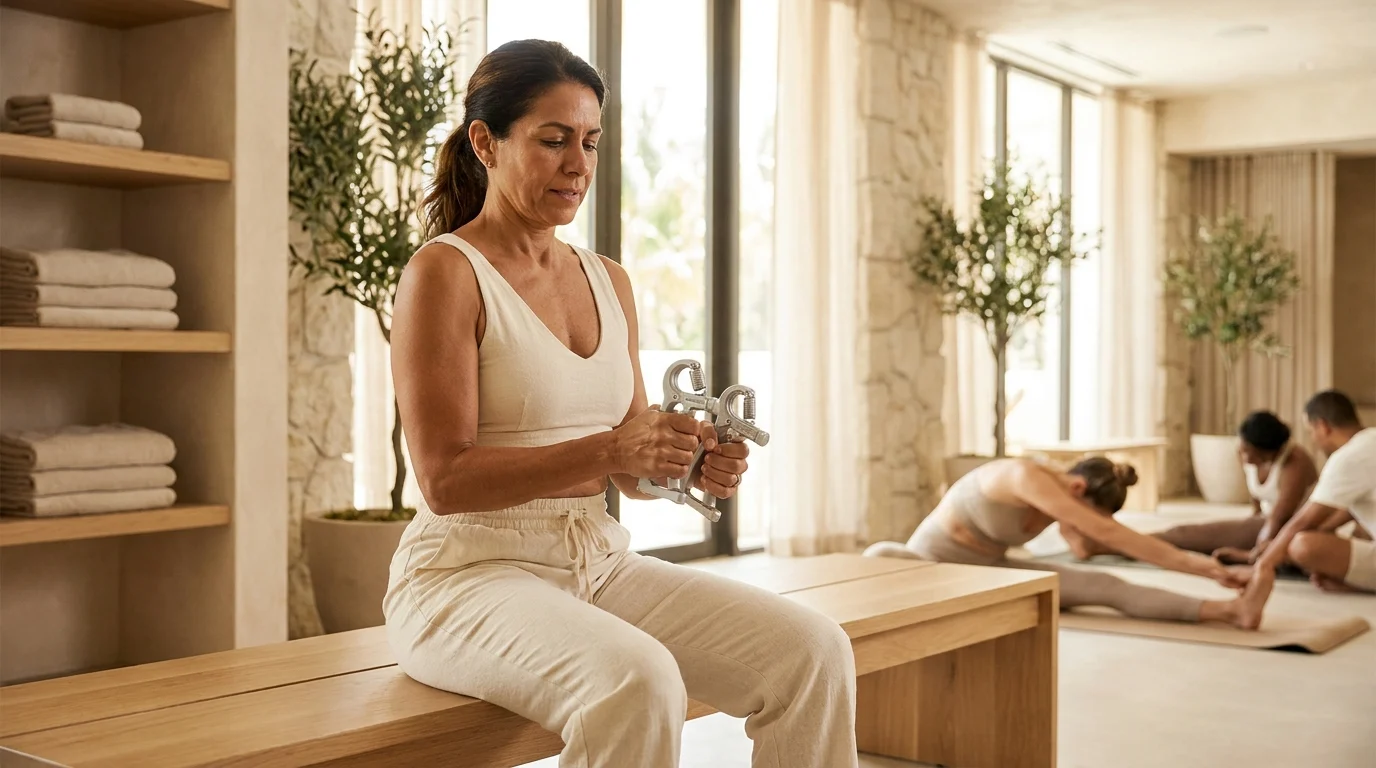
Grip strength is one of the simplest measurements in medicine, yet it may be one of the most powerful predictors of how long and how well you’ll live. A quick squeeze of a hand dynamometer reflects far more than forearm power — it serves as a window into your total muscle mass, your nervous-system health, and your overall resilience as you age. Research increasingly links weaker grip strength to higher risk of all-cause and cardiovascular death, which is why longevity and anti-aging clinicians treat it as a meaningful, low-cost biomarker rather than a gym-bro curiosity (1)(2).
This article explains why grip strength tracks so closely with healthspan, what the numbers tend to look like by age and sex, and the practical ways you can train it. The short version: grip is a proxy for whole-body strength, and whole-body strength is one of the strongest functional markers of biological aging we have.
Why Grip Strength Is a Longevity Biomarker
Grip strength works as a biomarker because it summarizes several things at once. It reflects the amount and quality of your muscle, the integrity of the nerves driving that muscle, and indirectly your nutrition, activity level, and recovery capacity. When any of those systems decline — as they tend to with age, illness, or inactivity — grip is often one of the first measures to drop.
The most cited evidence comes from the Prospective Urban Rural Epidemiology (PURE) study, a large international cohort led by Leong and colleagues and published in The Lancet in 2015 (1). In that analysis, each roughly 5 kg reduction in grip strength was associated with a higher risk of all-cause mortality and cardiovascular death. Notably, the researchers reported that grip strength was a stronger predictor of death than systolic blood pressure in their data. That finding should be read with appropriate caution — it comes from observational data, associations are not proof of cause, and a single biomarker never tells the whole story — but it has been broadly consistent with later reviews and meta-analyses (2)(3).
Why might a handshake outperform a blood pressure cuff? One leading interpretation is that grip strength integrates many systems into a single functional number. Blood pressure captures one cardiovascular parameter; grip strength reflects muscle, nerve, and overall vitality together. It’s less a magic measurement and more a compact summary of how robust the whole organism is.
Grip Strength, Muscle Mass, and Sarcopenia
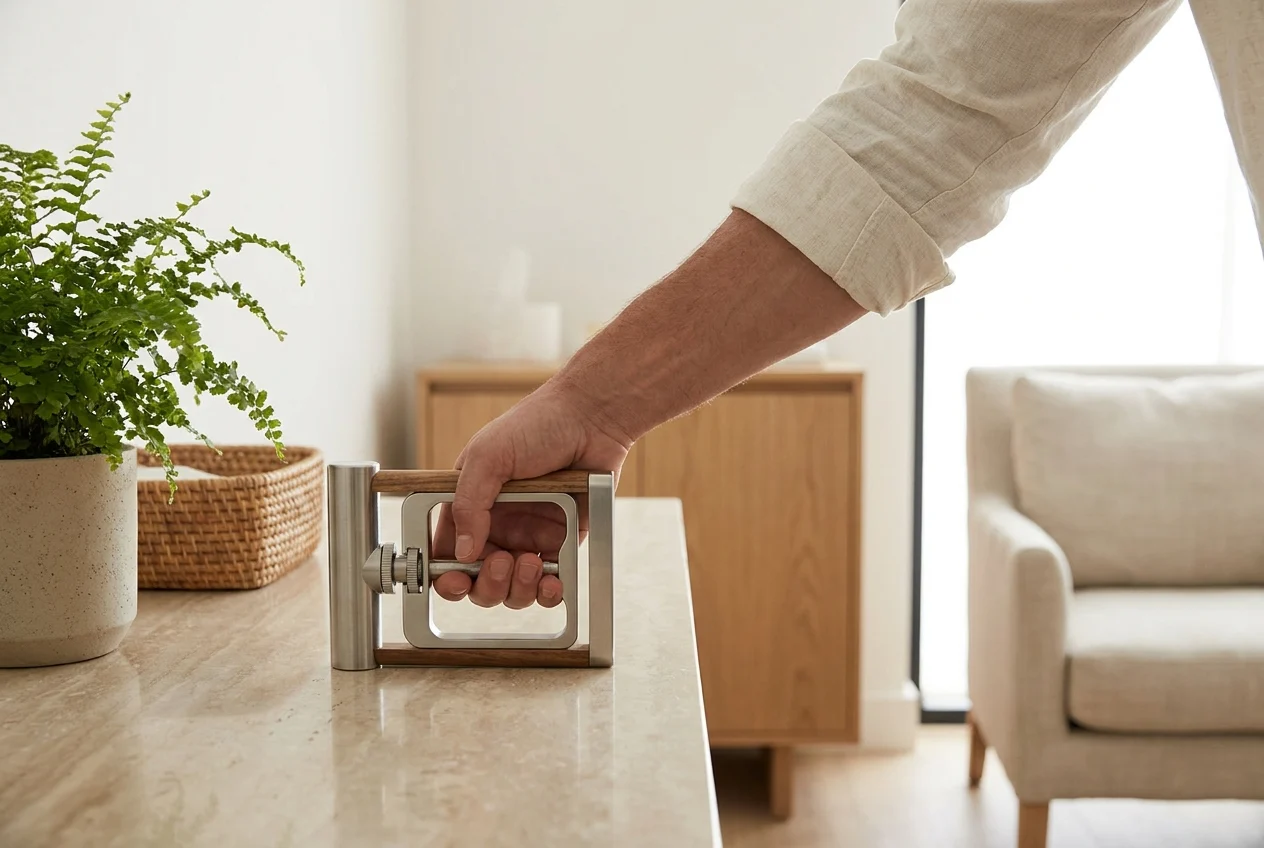
The clearest physiological link is to muscle. As people age, they lose muscle mass and strength in a process called sarcopenia, which typically accelerates after age 50 if left unaddressed. Sarcopenia is associated with falls, frailty, loss of independence, metabolic problems, and higher mortality.
Grip strength is one of the simplest screening tools for sarcopenia precisely because weakening grip often signals broader muscle decline. Major clinical working groups have incorporated grip strength thresholds into their definitions of low muscle strength. While exact cutoffs vary by population and dynamometer, commonly referenced screening thresholds are roughly below 27 kg for men and below 16 kg for women (4). Falling below those values doesn’t diagnose disease on its own, but it’s a flag worth investigating.
Importantly, grip is a proxy for whole-body strength, not just hand strength. You don’t improve your longevity outlook by training only your forearms. You improve it by getting stronger overall — and grip rises as a byproduct.
Grip Strength Reference Ranges and Mortality Thresholds
The table below offers general orientation values. Treat these as approximate: dynamometer models, hand dominance, body size, and measurement protocol all shift the numbers, so your personal trend over time matters more than any single reading.
| Age group | Typical male grip (kg / lbs) | Typical female grip (kg / lbs) |
|---|---|---|
| 20–39 | 46–52 / 101–115 | 28–32 / 62–71 |
| 40–59 | 40–48 / 88–106 | 25–30 / 55–66 |
| 60–69 | 35–42 / 77–93 | 22–27 / 49–60 |
| 70+ | 28–36 / 62–79 | 18–24 / 40–53 |
And a simplified view of how lower grip strength tends to associate with risk in the research literature:
| Grip strength band | General association in studies |
|---|---|
| Above age/sex norm | Lower all-cause and cardiovascular mortality risk |
| Each ~5 kg below | Incrementally higher mortality risk in PURE (1) |
| Below ~27 kg (men) / ~16 kg (women) | Common sarcopenia screening threshold (4) |
These associations describe populations, not individuals. A below-average reading is a prompt to act, not a verdict.
How to Improve Your Grip Strength
The encouraging part: grip strength is trainable at almost any age, and improving it usually means getting stronger overall. Consider these evidence-aligned approaches:
Train whole-body strength
Because grip tracks total strength, the foundation is progressive resistance training 2–3 times per week. Compound movements load the grip naturally:
- Deadlifts and rows — heavy pulling demands a strong grip
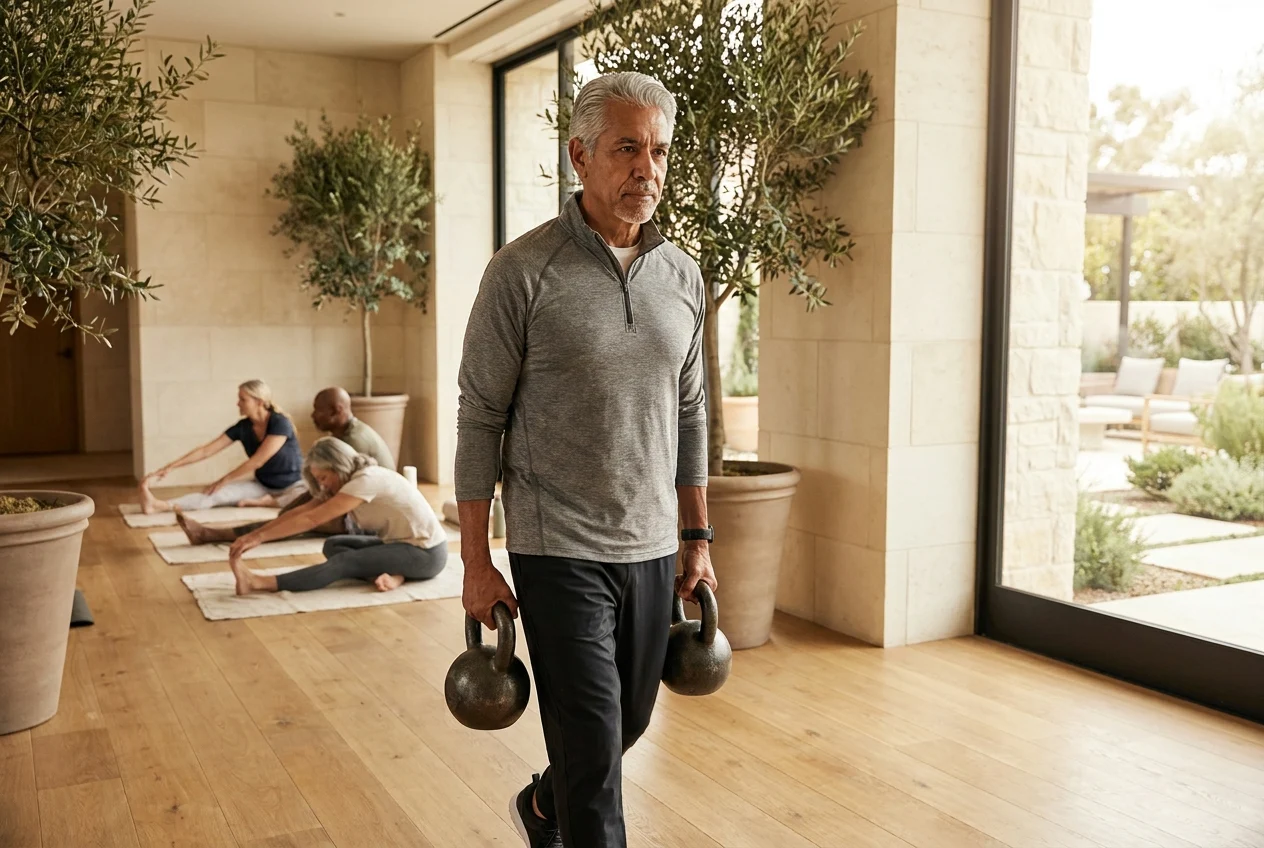
- Farmer’s carries — walking while holding heavy weights builds grip endurance
- Pull-ups and dead hangs — bodyweight loading for the hands and forearms
Add targeted grip work
Direct grip training complements the big lifts:
- Hand grippers and wrist curls
- Towel hangs or thick-bar holds
- Plate pinches
Support muscle with nutrition and recovery
Strength training works best alongside adequate protein (often cited around 1.2–2.0 g per kg of body weight for active adults, individualized to needs), sufficient sleep, and management of underlying health factors. For some people, optimizing hormones and other longevity inputs under medical supervision can support the muscle-building response — an area where individualized assessment matters.
Progress is usually gradual. Tracking your grip every few weeks with the same dynamometer gives you an objective signal that your broader strength work is paying off.
Putting It Into a Longevity Plan
Grip strength is most useful when it’s part of a bigger picture. On its own, it’s a single data point; combined with body composition, lab biomarkers, and a structured training and nutrition plan, it becomes a practical way to monitor functional aging over time. At Rewind Anti-Aging of Miami, we view measures like grip strength as part of a comprehensive longevity protocol and pair them with diagnostic testing to build an individualized picture of healthspan.
If you’re thinking about the bigger strategy of aging well, these related reads go deeper: how to slow biological aging and anti-aging in your 50s.
A weakening grip isn’t destiny. For most people it’s a signal — and signals can be acted on. Strength is one of the most modifiable longevity factors we know of, and it’s rarely too late to start building it.
Curious where your strength and biomarkers stand? Our Miami team can help you measure, interpret, and improve them as part of a personalized longevity program. Book a consult to get started.
Medical disclaimer: This article is for educational purposes only and is not a substitute for professional medical advice, diagnosis, or treatment. Consult a qualified clinician before starting any new exercise, nutrition, or treatment program.
Sources
- Leong DP, Teo KK, Rangarajan S, et al. Prognostic value of grip strength: findings from the Prospective Urban Rural Epidemiology (PURE) study. The Lancet. 2015;386(9990):266–273.
- Bohannon RW. Grip Strength: An Indispensable Biomarker For Older Adults. Clinical Interventions in Aging. 2019;14:1681–1691.
- García-Hermoso A, Cavero-Redondo I, Ramírez-Vélez R, et al. Muscular strength as a predictor of all-cause mortality: a systematic review and meta-analysis. Archives of Physical Medicine and Rehabilitation. 2018.
- Cruz-Jentoft AJ, Bahat G, Bauer J, et al. Sarcopenia: revised European consensus on definition and diagnosis (EWGSOP2). Age and Ageing. 2019;48(1):16–31.
Frequently Asked Questions
What is a good grip strength by age?
Grip strength typically peaks in the 30s and declines gradually after about age 50. As a rough guide, healthy men often measure 90–110 lbs (40–50 kg) in midlife and women 55–75 lbs (25–34 kg), with values declining roughly 10–20% per decade after 50. Because dynamometer models and protocols vary, the most useful number is your own trend over time compared against age- and sex-based norms.
How can I improve my grip strength?
Grip strength responds well to progressive resistance training. Effective approaches include deadlifts, farmer's carries, rows, pull-ups or dead hangs, and dedicated grip work like wrist curls or hand grippers. Because grip is a proxy for whole-body strength, full-body resistance training 2–3 times per week — paired with adequate protein — tends to raise grip alongside overall muscle mass.
Does grip strength really predict mortality?
Large studies, including the PURE study published in The Lancet in 2015, found that lower grip strength was associated with higher all-cause and cardiovascular mortality — and in that analysis it predicted death better than systolic blood pressure. Grip strength is a marker, not a guarantee, and it reflects broader factors like muscle mass, nutrition, and overall health.
How is grip strength measured?
Grip strength is measured with a hand dynamometer, a device you squeeze as hard as you can. Typically you take two or three readings per hand and record the best result in kilograms or pounds. Standardized positioning (seated, elbow at 90 degrees) makes results more comparable over time.
What is sarcopenia and how does it relate to grip strength?
Sarcopenia is the age-related loss of muscle mass and strength. Grip strength is one of the simplest clinical screens for it, because weakening grip often signals broader muscle decline. Catching it early creates an opportunity to intervene with resistance training, protein, and a longevity-focused plan.
Can grip strength be part of a longevity program?
Yes. Many longevity-focused clinics, including Rewind Anti-Aging of Miami, track grip strength alongside body composition and lab biomarkers as a low-cost, repeatable measure of functional aging. Trends over time help guide training, nutrition, and other interventions.
More in wellness
Comprehensive Lab Panel Miami: What Rewind Tests and Why
What a comprehensive lab panel should include beyond a standard physical — 30+ biomarkers across hormones, thyroid, metabolic health, and inflammation.
wellnessThe Rewind Anti-Aging Story: Why We Built This Clinic
The Rewind Anti-Aging story starts with a failing engineer in his mid-40s — and the gap in care that turned a personal fix into a Miami practice.
wellnessSnowbird Wellness Miami: Care That Travels With You
How seasonal residents keep hormone therapy, labs, and longevity care continuous across two states — and what to set up before you fly south or north.
⚕ Medical Disclaimer
The information on this page is for educational purposes only and does not constitute medical advice, diagnosis, or treatment. All treatments at Rewind Anti-Aging of Miami are performed under the supervision of licensed medical professionals. Individual results may vary. Consult your physician before beginning any new treatment protocol.
Meet our clinical team →Not sure which treatment is right for you?
Take our free 2-minute assessment and get a personalized recommendation.
Areas We Serve in Miami & South Florida
Our clinic at 24 NW 29th Street is in Wynwood & Midtown, minutes from Edgewater and Brickell. We also care for patients across Coral Gables, Aventura, Key Biscayne, and Doral — plus the entire state of Florida via telehealth.
Take the Next Step
Our team at Rewind Anti-Aging in Miami is here to help you determine if the Rewind Longevity Protocol is right for your goals.