
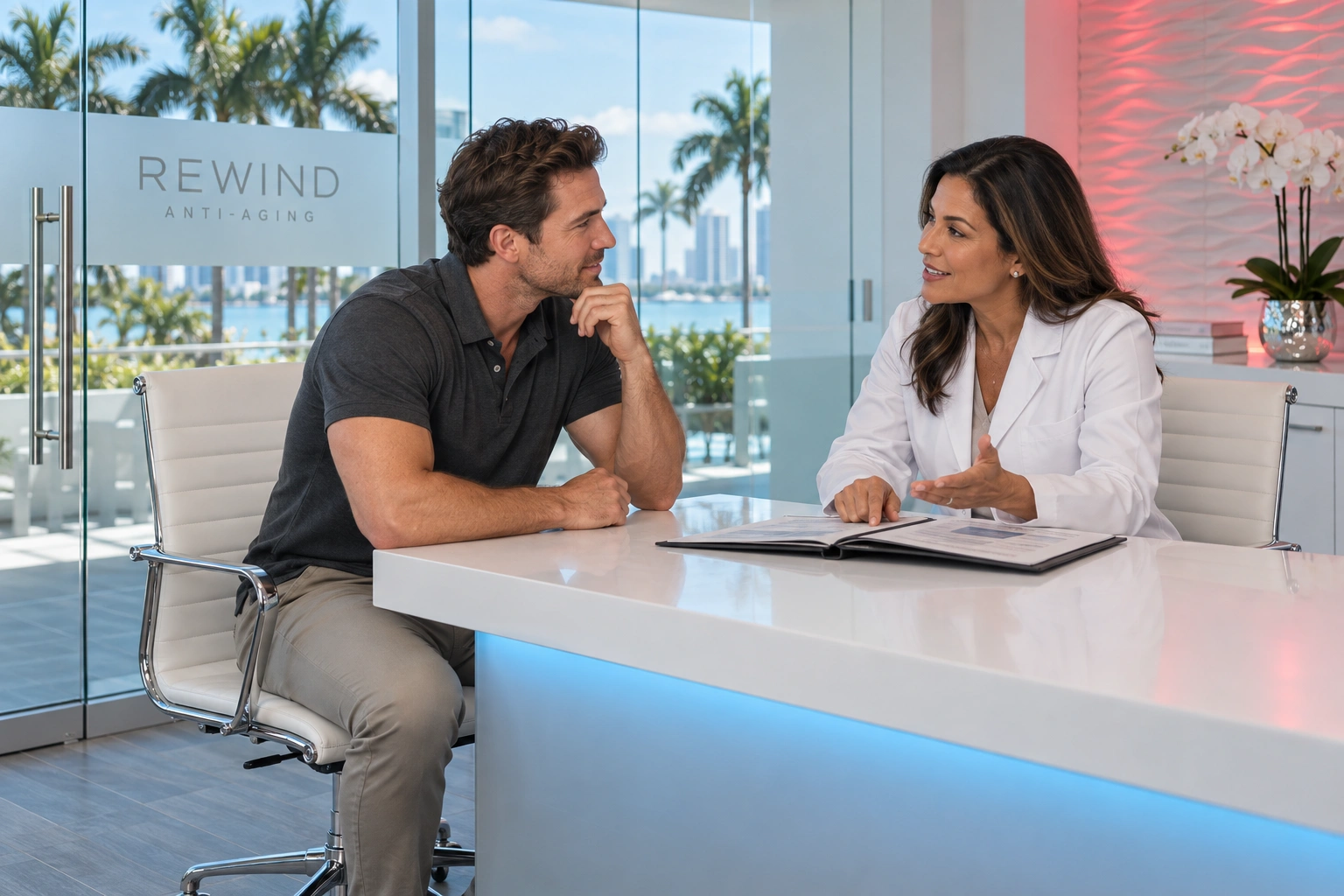
Most people who ask about anti-aging in your 30s are not trying to reverse anything. They feel broadly fine. Recovery from a hard week takes a little longer than it used to, the ten pounds that used to come off in a month now take three, and a friend a decade older has started talking about hormone panels. The real question is sequencing — what is worth doing now, and what can reasonably wait.
For this decade the answer is unusually clear, and it is not the answer the supplement market gives. Your 30s are the one window where nearly everything measurable is still at or near its peak. That makes it a poor decade for treatment and an excellent one for measurement.
What Actually Changes in Your 30s
The changes are real, but they are slow and mostly invisible without data.
Muscle mass starts its decline. Lean mass peaks in the late 20s and then falls at roughly 3 to 8 percent per decade, a process that accelerates later but begins here (1). In your 30s this rarely shows up as weakness. It shows up as the same number on the scale with a softer composition underneath it.
Aerobic capacity begins falling. VO2 max declines at approximately 10 percent per decade in sedentary adults from around age 30, and a meaningful share of that loss tracks the loss of muscle rather than the heart itself (2). This is the marker with the strongest association with all-cause mortality, and it is also among the most trainable.
Bone is in maintenance mode. Peak bone mass is typically reached in the late 20s. From your 30s onward the skeleton is no longer accruing density; it is holding or losing it (3). Loading it deliberately matters more from here than it did before.
Testosterone begins a slow drift in men. Total testosterone declines by roughly 1 percent per year from the early 30s (4). At 35 that usually sits comfortably inside the reference range. The value of measuring it now is that it defines your personal starting point.
Hormonal variability begins for women. Perimenopause typically starts in the 40s, but cycle changes, progesterone shifts, and the first fertility questions frequently surface in the late 30s. A baseline drawn before that is genuinely useful. Our article on why perimenopause starts earlier than most women expect covers where that line actually falls.
Why Anti-Aging in Your 30s Is Mostly About Baselines

Here is the argument for measuring early, and it is a statistical one rather than a clinical one.
Reference ranges describe populations. They are built so that roughly 95 percent of a sampled group falls inside them, which means a result can sit well within “normal” and still be far below your normal. A man whose total testosterone was 780 ng/dL at 32 and 430 ng/dL at 44 has lost nearly half of his own baseline while never once leaving the reference range. Without the first number, the second one looks unremarkable, and the conversation that should happen does not.
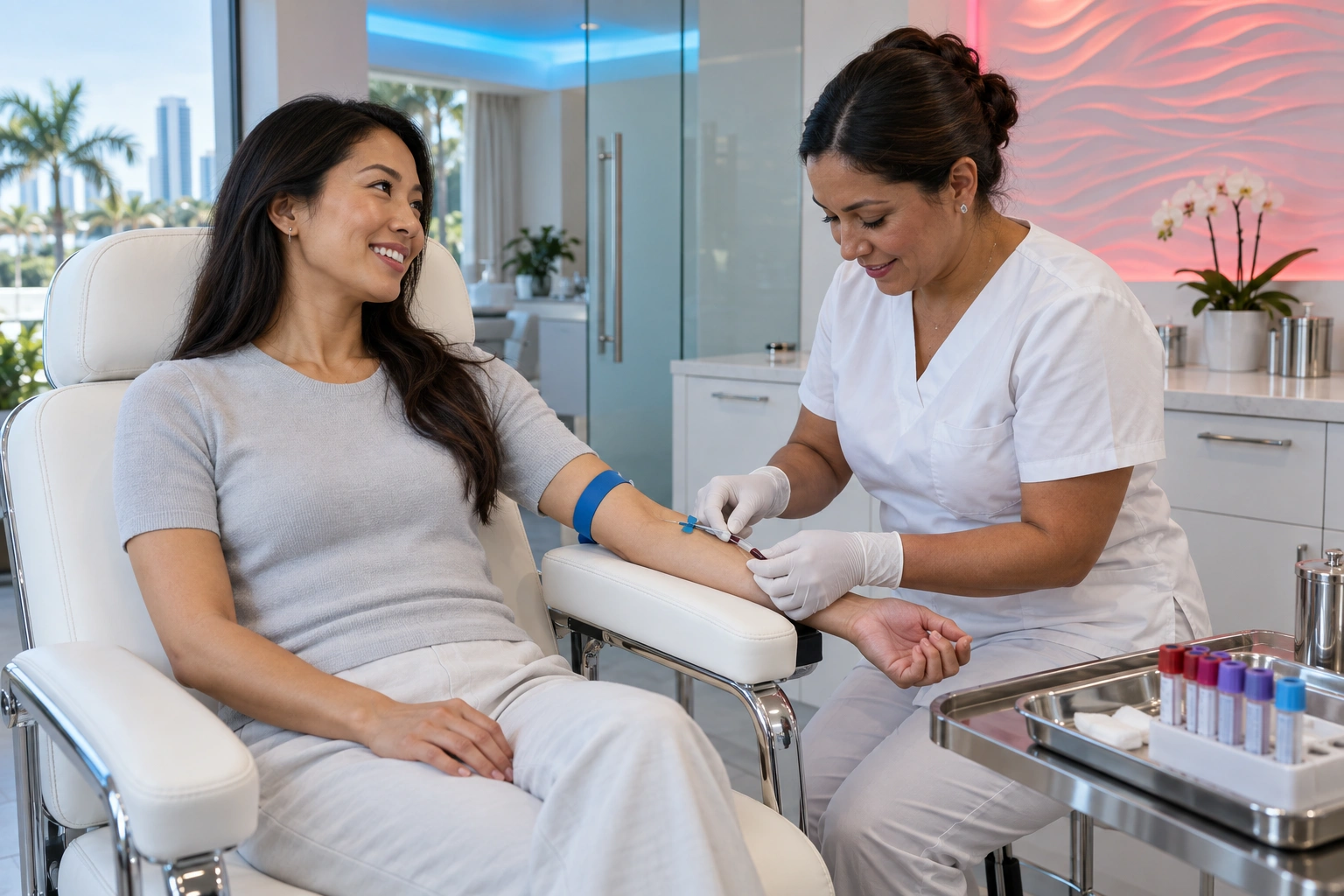
The same logic applies to fasting insulin, apoB, hs-CRP, thyroid function, and body composition. One panel in your mid-30s converts every future panel from a population comparison into a personal trend. That is the highest-value thing this decade offers, and it costs a single blood draw.
It is worth being clear about what a baseline is not. It is not a diagnosis, and it does not imply treatment. Most people in their 30s who get comprehensive labs need nothing except a repeat in two or three years.
The Four Interventions With the Best Evidence
The list is short, which is the point. In your 30s the fundamentals are not a starting point you graduate from — they are the whole intervention.
Resistance training, two to four sessions per week. This is the highest-yield item on the list. It defends lean mass directly, improves insulin sensitivity, loads bone, and moves cardiovascular risk markers, all from the same stimulus. Testosterone and exercise appear to act on lean mass and strength through overlapping but distinct pathways, and in aging men exercise carries effects that hormone levels alone do not explain (5). Our piece on strength training for longevity covers programming in more detail.
Protein at roughly 1.6 g per kilogram of body weight per day. For a 175-pound adult that is about 125 g. This is the intake range where resistance training reliably produces lean-mass gains rather than maintenance. Most people in their 30s eat well under it.
Zone 2 and high-intensity work for aerobic capacity. Because VO2 max declines on its own and responds well to training, some structured cardiovascular work belongs in the week rather than being left to incidental activity. See zone 2 cardio for how to set the intensity, and VO2 max testing for how to measure it.
A consistent sleep schedule. Sleep architecture changes with age, and growth hormone release, appetite regulation, insulin sensitivity, and recovery all depend on it. Sleep is also the variable most often responsible for a borderline hormone panel in a 35-year-old, which is why it gets investigated before anything gets prescribed. Our article on sleep and aging covers what shifts and when.
None of these are novel. They are on the list because they have the evidence, and because the alternative offers on the market at this age generally do not.
What to Measure Now

A useful baseline in your 30s is broader than a standard physical and narrower than the panels marketed to people twice your age.
| Domain | What to run | Why in your 30s |
|---|---|---|
| Metabolic | Fasting insulin, HbA1c, glucose | Insulin resistance precedes glucose changes by years |
| Cardiovascular | apoB, lipid panel, hs-CRP, Lp(a) once | Lp(a) is genetic — measure it once, ever |
| Hormonal | Total and free testosterone, SHBG, estradiol, FSH, full thyroid | Defines personal range before drift begins |
| Nutrient | Vitamin D, ferritin, B12 | Common, correctable, symptom-producing |
| Composition | Body-composition scan | Catches the muscle-for-fat trade the scale hides |
Two of those deserve a note. Lp(a) is largely genetically determined and only needs measuring once in a lifetime, which makes your 30s the right time to do it. And body composition matters here more than weight does, because a stable weight in this decade frequently conceals a gradual exchange of lean mass for fat.
What Is Not Worth Buying Yet
A decade with little to treat is a decade with a great deal to sell, so it is worth naming what generally does not earn its cost at this age.
Growth hormone peptides. The growth hormone axis does begin declining from the 30s, but in a healthy 35-year-old the decline is small, and the response to sleep, training, and body composition is larger than the response to a secretagogue. For most people this is a conversation for the 40s and 50s.
NAD+ infusions as a standing subscription. There is genuine science behind NAD biology and very little human outcome data supporting repeated infusions in healthy young adults. As an occasional intervention it is defensible. As a monthly commitment in your 30s it is expensive optimism.
Testosterone for a number that sits inside the range. This is the most consequential version of the mistake, which is why it is worth stating twice. Exogenous testosterone suppresses your own production, and in this decade it carries fertility implications that matter to most people. It is treatment for a diagnosis, not a tune-up.
Large supplement stacks. Vitamin D if you are deficient, magnesium if your intake is poor, creatine if you lift, omega-3 if you do not eat fish — that covers most of the defensible list at this age. A fifteen-bottle protocol assembled from podcasts is mostly expensive urine.
Annual whole-body imaging. Screening asymptomatic people in their 30s turns up a high rate of incidental findings that lead to further scans, biopsies, and worry without a demonstrated benefit at this age. Our article on whether full-body MRI is worth it covers where the trade-off actually falls.
None of this is a blanket dismissal. Several of these become genuinely useful later, and a few are useful now for specific people with specific findings. The point is narrower: in your 30s the return on the fundamentals is unusually high and the return on nearly everything else is unusually low, which is roughly the inverse of how the market is priced.
Where Hormones Do and Do Not Belong in This Decade
This is where honest advice diverges from a sales pitch.
For most people in their 30s, hormone therapy is not the answer, and a borderline result should trigger a workup rather than a prescription. Low testosterone in a 34-year-old is frequently downstream of something else — poor sleep, excess body fat, heavy alcohol use, overtraining, undereating, or untreated thyroid dysfunction — and treating the number without finding the cause means managing a symptom indefinitely.
There are real exceptions. Genuine hypogonadism occurs in this decade and deserves proper diagnosis and treatment. So does thyroid disease, and so do the fertility-adjacent hormone questions that come up in the late 30s. The distinction is diagnosis versus optimization: a confirmed deficiency is treated at any age, while a number that is merely lower than you would like is investigated first.
If you are weighing what this decade sets up for the next one, our companion piece on anti-aging in your 40s covers where the calculus genuinely changes — and it changes considerably.
What This Looks Like at Rewind
At Rewind the 30s visit is usually a short one. We run a comprehensive diagnostic panel and a body-composition scan, review sleep, training, nutrition, and alcohol, and flag anything that looks like a trend worth watching rather than a problem worth treating. Frequently the recommendation is a training and nutrition change plus a repeat panel in two or three years.
When there is something to treat, we treat it, and our longevity protocol is built to be adjusted as a trend develops rather than started all at once. For a wider view of why we frame the work this way, see healthspan vs lifespan and biological age vs chronological age.
If you want a baseline you can measure against for the next twenty years, a consultation is the place to start.
This article is for general education and is not medical advice. Lab interpretation, hormone therapy, and any treatment decision depend on your individual history and should be made with a qualified clinician.
Sources
- Sinha-Hikim I, et al. Testosterone and sarcopenia. PMC. pmc.ncbi.nlm.nih.gov/articles/PMC6119844/
- Fleg JL, Lakatta EG. Role of muscle loss in the age-associated reduction in VO2 max. PubMed. pubmed.ncbi.nlm.nih.gov/3182484/
- National Institute of Arthritis and Musculoskeletal and Skin Diseases. Osteoporosis. niams.nih.gov/health-topics/osteoporosis
- Sinha-Hikim I, et al. Testosterone and sarcopenia. PMC. pmc.ncbi.nlm.nih.gov/articles/PMC6119844/
- Comparing the impacts of testosterone and exercise on lean body mass, strength and aerobic fitness in aging men. PMC. pmc.ncbi.nlm.nih.gov/articles/PMC10987448/
- National Institute on Aging. Exercise and physical activity. nia.nih.gov/health/exercise-physical-activity
Frequently Asked Questions
Is it too early to think about anti-aging in your 30s?
No, though the work looks different than it does later. In your 30s the goal is not to reverse decline but to record where you started and protect the tissue that is hardest to rebuild later — muscle, bone, and cardiorespiratory fitness. A lab panel taken at 34 is far more informative at 44 than a first panel taken at 44, because it tells you what your own normal is rather than what the population average is.
What tests should I get in my 30s?
A reasonable baseline includes a complete metabolic and lipid panel with apoB, fasting insulin and HbA1c, a full thyroid panel, hs-CRP, vitamin D, ferritin, total and free testosterone with SHBG for men, and estradiol with FSH for women. Body composition is worth adding, because scale weight in your 30s frequently hides a slow trade of muscle for fat. None of this requires symptoms to be useful.
Do I need hormone therapy in my 30s?
Usually not. Most people in their 30s have hormone levels in a healthy range, and the right response to a borderline result at 34 is to investigate causes — sleep, body composition, alcohol, training load, thyroid function — rather than to start replacement. The exception is genuine, lab-confirmed deficiency, which does occur in this decade and should be worked up properly rather than assumed.
What is the single highest-yield habit to start in your 30s?
Resistance training, if you are choosing only one. It is the only intervention that directly defends the tissue that declines most predictably with age, and it also improves insulin sensitivity, bone density, and cardiovascular risk markers at the same time. Two to four sessions per week is enough to change the trajectory; more is optional.
How much does aging actually progress during your 30s?
Less than most people fear, but measurably. Muscle mass begins declining at roughly 3 to 8 percent per decade after about age 30, VO2 max falls around 10 percent per decade in sedentary adults, and testosterone in men declines by approximately 1 percent per year from the early 30s onward. Those are averages across populations, and training status shifts all three substantially.
More in wellness
Creatine and Menopause: Strength, Bone, and Mood
Creatine and menopause research points to real gains in strength, lean mass, and hip bone density when creatine is paired with resistance training.
wellnessComprehensive Lab Panel Miami: What Rewind Tests and Why
What a comprehensive lab panel should include beyond a standard physical — 30+ biomarkers across hormones, thyroid, metabolic health, and inflammation.
wellnessThe Rewind Anti-Aging Story: Why We Built This Clinic
The Rewind Anti-Aging story starts with a failing engineer in his mid-40s — and the gap in care that turned a personal fix into a Miami practice.
⚕ Medical Disclaimer
The information on this page is for educational purposes only and does not constitute medical advice, diagnosis, or treatment. All treatments at Rewind Anti-Aging of Miami are performed under the supervision of licensed medical professionals. Individual results may vary. Consult your physician before beginning any new treatment protocol.
Meet our clinical team →Not sure which treatment is right for you?
Take our free 2-minute assessment and get a personalized recommendation.
Areas We Serve in Miami & South Florida
Our clinic at 24 NW 29th Street is in Wynwood & Midtown, minutes from Edgewater and Brickell. We also care for patients across Coral Gables, Aventura, Key Biscayne, and Doral — plus the entire state of Florida via telehealth.
Take the Next Step
Our team at Rewind Anti-Aging in Miami is here to help you determine if diagnostic testing is right for your goals.