
Every cell in your body depends on a single molecule to produce energy, repair DNA, and activate the longevity pathways that protect against age-related decline. That molecule is nicotinamide adenine dinucleotide — NAD+. It is not a supplement, a vitamin, or a trend. It is a coenzyme so fundamental to human biology that without it, your mitochondria cannot generate ATP, your DNA repair enzymes cannot function, and the protective proteins that regulate aging go silent.
The problem is that NAD+ in your tissues declines with age. In human skin, adults aged 51 to 70 averaged less than half the NAD+ of adults aged 30 to 50, and NAD+ also falls with age in the brain and in muscle. This depletion is not just a marker of aging — it is, according to a growing body of evidence, one of its central drivers.
NAD+ IV therapy at Rewind Anti-Aging Miami delivers this essential molecule directly into your bloodstream, bypassing the gut. Here is what the science says, what treatment actually feels like, and how it fits into a comprehensive longevity strategy as part of our data-driven process.
What Is NAD+ and Why Does It Matter?
Nicotinamide adenine dinucleotide (NAD+) is a coenzyme present in every living cell in your body. It carries electrons through the reactions that turn food into energy, and it is used up by enzymes that repair DNA and regulate cell stress. Without adequate NAD+, the biological machinery that keeps you alive and functioning begins to break down at the cellular level.
You can think of NAD+ as the molecular currency your cells spend on their most essential operations. When the supply runs low, every system that depends on it starts to suffer: energy production slows, DNA damage accumulates, and the protective mechanisms that keep cells healthy become impaired.
NAD+ is not optional biology. It is foundational.
The Four Critical Functions of NAD+

DNA Repair via PARP Enzymes
Your DNA sustains tens of thousands of damage events every single day from oxidative stress, UV exposure, environmental toxins, and normal metabolic byproducts. The enzymes responsible for detecting and repairing this damage — poly(ADP-ribose) polymerases, or PARPs — are entirely dependent on NAD+ as their fuel source. Without sufficient NAD+, PARP activity declines and DNA damage accumulates, contributing to genomic instability, cellular dysfunction, and accelerated aging.
NAD+ is the sole substrate for PARP (Massudi et al., 2012). A 2018 review by Rajman, Chwalek, and Sinclair in Cell Metabolism brings together the animal evidence linking NAD+ depletion to impaired DNA repair and the hallmarks of aging.
Mitochondrial Energy Production
Your mitochondria convert the food you eat into ATP — the energy molecule that powers every process in your body, from muscle contraction to neural signaling. NAD+ serves as an essential electron carrier in the citric acid cycle and oxidative phosphorylation, the two biochemical pathways responsible for ATP generation.
When NAD+ levels fall, mitochondrial efficiency drops. The result is not just feeling tired — it is a systemic reduction in the energy available for cellular maintenance, immune function, and tissue repair. This mitochondrial dysfunction is recognized as one of the primary hallmarks of biological aging.
Sirtuin Activation
Sirtuins are a family of seven proteins (SIRT1 through SIRT7) often called “longevity genes” because of their central role in regulating cellular health, inflammation, metabolism, and stress resistance. Every sirtuin in your body is NAD+-dependent — they literally cannot function without it.
When NAD+ is abundant, sirtuin activity is robust: your cells maintain healthy gene expression patterns, inflammatory responses remain calibrated, and autophagy (the cellular recycling process that clears damaged components) functions efficiently. When NAD+ declines, sirtuin activity decreases, and these protective mechanisms weaken across every organ system.
David Sinclair’s laboratory at Harvard Medical School has published extensively on the NAD+-sirtuin axis, demonstrating that restoring NAD+ levels reactivates sirtuin-mediated protective pathways in aged tissues. This body of work has positioned NAD+ as a central node connecting multiple aging mechanisms rather than just one factor among many.
Circadian Rhythm Regulation
NAD+ levels naturally fluctuate throughout the day in a circadian pattern, and this rhythm directly influences your molecular clock — the internal system governing sleep-wake cycles, hormone release, metabolic timing, and cellular repair schedules. When NAD+ metabolism becomes disrupted, circadian function deteriorates, compounding other age-related decline through poor sleep quality, irregular hormone patterns, and impaired overnight tissue repair.
If you have noticed that your sleep quality has declined with age, disrupted NAD+-circadian signaling may be a contributing factor that conventional sleep interventions do not address.
Why Your NAD+ Levels Are Declining
The age-related decline in NAD+ is well-documented and driven by multiple converging mechanisms. Understanding why this happens helps explain why simply “living healthy” is often insufficient to prevent it.
CD38 upregulation. CD38 is an NAD+-consuming enzyme whose expression increases dramatically with age and chronic inflammation. Camacho-Pereira et al. (2016) found CD38 gene expression up to 2.5 times higher in fat tissue from older adults than from younger ones, and showed in mice that CD38 drives the age-related NAD+ decline — mice without CD38 kept their NAD+ as they aged.
Chronic inflammation. Persistent low-grade inflammation — sometimes called “inflammaging” — activates immune pathways that consume NAD+ at accelerated rates. This creates a vicious cycle: NAD+ depletion impairs the sirtuin-mediated anti-inflammatory pathways that would otherwise resolve the inflammation, which in turn consumes more NAD+.
Accumulated DNA damage. As DNA damage increases with age, PARP enzymes consume more NAD+ for repair, diverting it from other essential functions like sirtuin activation and mitochondrial maintenance. Your body is forced to triage, and the result is that some critical systems are left under-resourced.
Metabolic stress. Caloric excess, insulin resistance, obesity, and sedentary behavior all place increased demands on NAD+-dependent metabolic pathways, depleting reserves faster than they can be replenished through normal biosynthesis.
Lifestyle factors. Alcohol consumption, poor sleep, and chronic psychological stress each accelerate NAD+ depletion through distinct biochemical mechanisms. These effects are cumulative and compound over time.
The net result: NAD+ measured in skin, brain, and muscle is lower in older adults than in younger ones, and the consequences manifest as fatigue, cognitive decline, slower recovery, metabolic dysfunction, and visibly accelerated aging.
IV NAD+ vs. Oral Supplementation: The Bioavailability Question
The supplement market offers several NAD+ precursors — primarily nicotinamide mononucleotide (NMN) and nicotinamide riboside (NR). Both have research supporting their ability to modestly raise NAD+ levels when taken orally. So why would you choose IV therapy instead?
The difference is the route.
Oral NMN and NR must survive gastric degradation, achieve intestinal absorption, enter circulation, and then undergo multiple enzymatic conversion steps before becoming NAD+. They do raise NAD+ in people: six weeks of NR at 1,000 mg a day raised NAD+ in blood cells by about 60%. In the two trials that measured NAD+ in muscle biopsies, oral NR and NMN raised it in blood cells but not in muscle.
IV NAD+ delivers the intact molecule directly into your bloodstream, bypassing gastrointestinal absorption and first-pass metabolism in the liver. In the first human study of IV NAD+ (Grant et al., 2019), a 750 mg infusion over 6 hours left plasma NAD+ unchanged for the first 2 hours, then raised it to about 400% above baseline by the end of the infusion, with its breakdown products rising alongside it.
Oral NMN and NR supplements are not worthless. They may serve a maintenance role between infusions, and emerging research continues to refine our understanding of their clinical utility. Rewind offers NAD+ both as an in-clinic IV infusion and as a subcutaneous injection you give yourself at home, and your provider recommends the route that fits your goals.
What the Research Actually Shows

Intellectual honesty requires distinguishing between what has been established and what is still emerging. Here is where the evidence stands.
Well-established evidence:
- NAD+ declines with age in human skin, brain, and muscle — shown in multiple human studies; whole-blood NAD+, measured across seven cohorts in 2026, stays stable with age
- IV NAD+ raises plasma NAD+: in the first human study, a 750 mg infusion over 6 hours raised it to about 400% above baseline by the end, after no change in the first 2 hours
- NAD+ is biochemically essential for mitochondrial energy production (ATP synthesis), DNA repair (via PARP), and sirtuin activation — this is established biochemistry
- The NAD+-sirtuin axis plays a central role in cellular aging mechanisms, as demonstrated by Sinclair and colleagues at Harvard and confirmed by independent research groups worldwide
- Patients consistently report improvements in energy, mental clarity, sleep quality, and recovery following IV NAD+ protocols — this is supported by clinical observation across thousands of treatments
Evidence that is still developing:
- Large-scale, randomized controlled trials specifically examining IV NAD+ in humans are still underway. Much of the mechanistic data comes from animal models and cell studies
- Optimal dosing, frequency, and protocol duration have not been standardized through definitive phase III trials — current protocols are based on clinical experience and emerging data
- The degree to which NAD+ therapy independently slows or reverses biological aging in humans requires longer-term outcome studies
Our position: NAD+ IV therapy is a well-supported intervention with strong biological rationale and consistent clinical results. It is not a miracle cure, and we do not present it as one. Patients deserve accurate expectations, and honest communication is the foundation of trust.
What an NAD+ IV Session Actually Feels Like
If you have never had an NAD+ infusion, you probably want to know what to expect in practical terms. Here is an honest account.
Before Your Session
You will arrive at our Miami clinic having eaten a light meal and hydrated well. Your provider will review your medical history, current medications, and treatment goals. If this is your first session, a lower starting dose (typically 250mg) is common to assess your tolerance before progressing to higher therapeutic doses.
During the Infusion
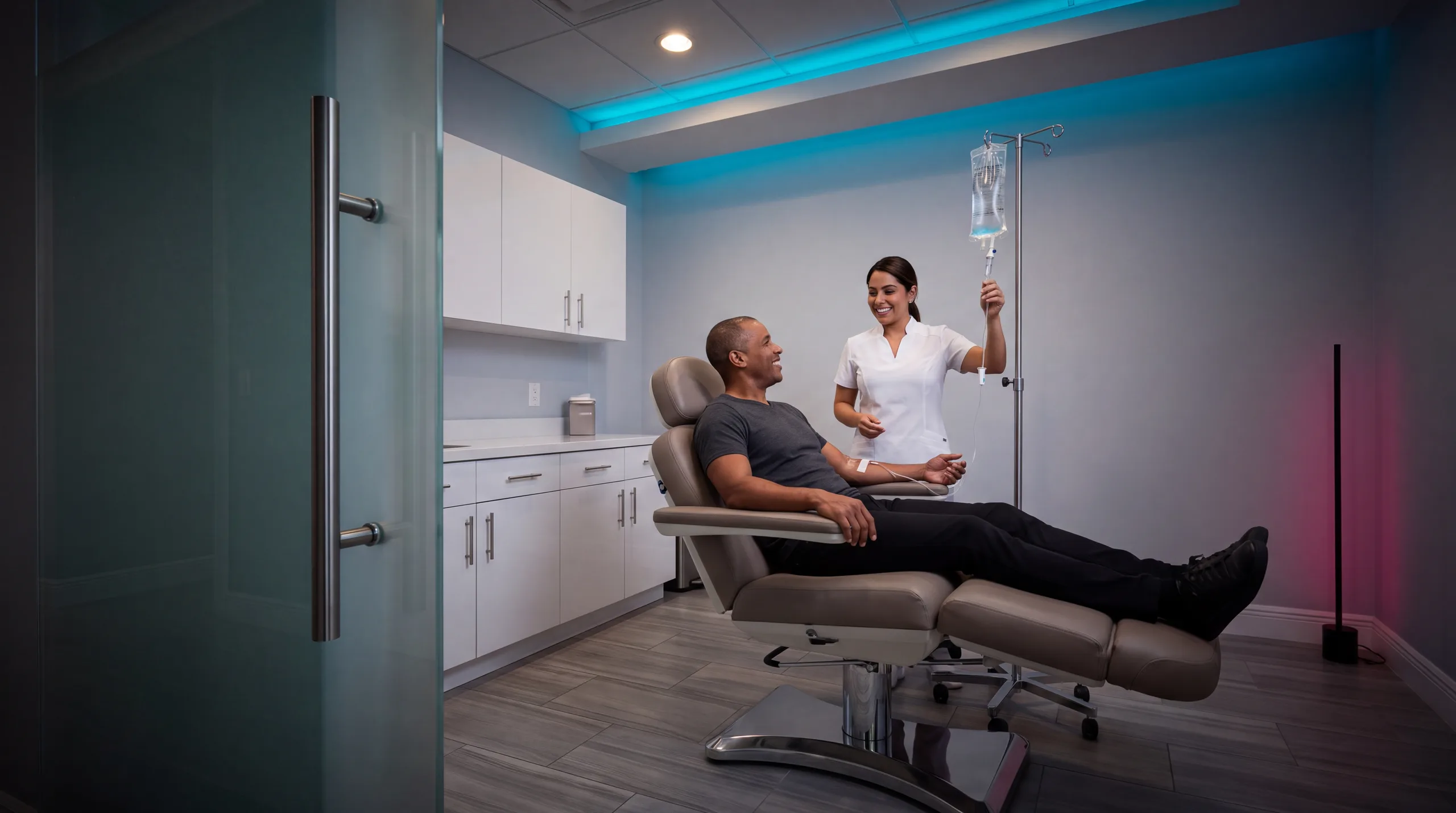
The IV is placed in your arm and the NAD+ solution begins dripping at a controlled rate. A typical session lasts 2 to 4 hours depending on the dose — higher doses (500mg to 750mg) require slower infusion rates. You will be seated or reclined comfortably, and most patients use the time to read, work on a laptop, watch something, or simply rest.
During the infusion, you may experience:
- Mild flushing or warmth in the chest, abdomen, or face — this is the most common sensation
- Temporary chest tightness — a pressure sensation that resolves within minutes when the drip rate is slowed
- Mild nausea — more common at higher doses or if the rate is too fast
- Lightheadedness — transient and self-resolving
These sensations are entirely normal and dose-rate dependent. Experienced IV nurses manage them by adjusting the drip speed. They are not dangerous, they do not indicate a problem, and they resolve completely once the infusion is slowed or finished.
After the Session
Most patients feel noticeably different within 24 to 48 hours of their first infusion. The most commonly reported immediate effects are increased mental clarity, sustained energy that does not feel stimulant-driven, and improved mood. Some patients describe it as a fog lifting that they did not realize was there until it was gone.
The full benefits of a loading phase — including improved sleep architecture, faster physical recovery, and enhanced cognitive endurance — typically develop over 2 to 4 weeks as NAD+-dependent pathways are restored to more optimal function.
Who Benefits Most From NAD+ IV Therapy
NAD+ therapy is appropriate for a broad patient population, but certain groups see the most dramatic results.
Adults over 40. If you are experiencing the gradual decline that most people accept as “normal aging” — reduced energy, slower recovery, diminished mental sharpness, disrupted sleep — NAD+ depletion may be a significant contributing factor. Patients in this group frequently describe the results as feeling years younger in terms of baseline function.
Chronic fatigue sufferers. When fatigue persists despite adequate sleep, proper nutrition, and normal lab values, mitochondrial dysfunction is often an underlying driver. NAD+ therapy addresses this at the cellular level by restoring the fuel supply your mitochondria need to generate energy efficiently.
Post-viral recovery. Individuals recovering from viral infections that have left lingering fatigue, brain fog, or reduced exercise tolerance may benefit from NAD+‘s role in supporting immune cell metabolism and mitochondrial recovery. This has become an increasingly common application.
Cognitive decline. The brain consumes roughly 20% of your total energy despite comprising only 2% of your body mass. This extreme metabolic demand makes neural tissue acutely sensitive to NAD+ depletion. Patients experiencing brain fog, difficulty concentrating, or declining memory often report cognitive improvements as the first benefit they notice.
Athletes and active individuals. If you train intensely and want faster recovery, reduced exercise-induced inflammation, and preserved performance as you age, NAD+ therapy supports the mitochondrial density and cellular repair mechanisms that underpin athletic capacity.
Longevity-focused patients. If your goal is to slow biological aging at the cellular level rather than merely managing symptoms, NAD+ therapy is one of the few interventions that directly targets the molecular machinery of aging. Patients interested in measuring these effects objectively can use TrueAge epigenetic testing to quantify biological age before and after treatment.
NAD+ IV Therapy vs. NMN Supplements: A Direct Comparison

With NMN supplements widely available and heavily marketed, you may wonder whether oral supplementation is sufficient or whether IV therapy offers meaningful advantages. Here is an honest comparison.
| Factor | NAD+ IV Therapy | Oral NMN Supplements |
|---|---|---|
| Route | Directly into the bloodstream | Swallowed; the body converts NMN to NAD+ |
| Blood NAD+ | About 400% above baseline by the end of a 6-hour, 750 mg infusion (no change in the first 2 hours) | Raised in blood cells over a 10-week trial |
| Convenience | Clinical visit, 2-4 hours | Daily capsule at home |
| Cost per session | Higher per visit | Lower per dose |
| Medical supervision | Yes, with dosing adjustments | No (self-administered) |
| Best for | Loading, significant depletion, acute need | Maintenance between infusions |
The two approaches are not mutually exclusive. Many patients at our clinic use oral NMN as a daily maintenance strategy between monthly or quarterly IV sessions, combining the convenience of supplementation with the therapeutic potency of IV delivery.
How NAD+ Fits Into a Comprehensive Longevity Protocol
NAD+ therapy produces meaningful results on its own, but its benefits are amplified when integrated into a broader anti-aging strategy. At Rewind Anti-Aging Miami, NAD+ infusions function as one component of a personalized protocol that may include:
Hormone optimization. NAD+ restores cellular energy and activates longevity pathways, but if your testosterone, thyroid, or other hormones are significantly out of range, addressing those imbalances concurrently ensures the signaling environment supports repair and regeneration. The two systems are synergistic.
Peptide therapy. Peptides like BPC-157, sermorelin, and MOTS-c provide targeted support for tissue repair, growth hormone optimization, and mitochondrial function. Combined with NAD+, these interventions address aging from multiple biochemical angles simultaneously.
Diagnostic testing. Our process begins with comprehensive bloodwork, metabolic panels, and where appropriate, epigenetic age testing to establish your baseline. This data ensures that NAD+ therapy — and every other intervention — is targeted to your specific biology rather than applied generically.
IV nutrient support. IV therapy protocols delivering glutathione, high-dose vitamin C, and other cofactors can complement NAD+ by supporting the biochemical environment in which NAD+-dependent enzymes operate most efficiently.
The result is not a single improvement but a compounding effect — each intervention enhances the others, producing a systemic shift in how your body functions, recovers, and ages.
Frequency and Protocol Design
How often you need NAD+ therapy depends on your starting point, goals, and response to treatment.
Loading phase (weeks 1-2). Most patients begin with 2 to 4 infusions over 1 to 2 weeks at doses ranging from 250mg to 750mg. This loading period is designed to restore depleted NAD+ reserves. The loading phase is when most patients first notice significant improvements in energy, cognition, and overall function.
Maintenance phase (ongoing). After the loading phase, monthly infusions maintain elevated NAD+ levels. Some patients with robust baseline health and complementary oral supplementation can extend to quarterly sessions. Your provider will adjust frequency based on your subjective response and, where available, objective biomarker data.
Periodic reassessment. Protocols are not static. As your health changes, your NAD+ therapy is adjusted accordingly. Patients who add new stressors (intense training, travel schedules, illness) may benefit from temporary increases in frequency, while those who have optimized multiple aspects of their health may maintain results with less frequent sessions.
What NAD+ Therapy Does Not Do
Transparency about limitations is as important as enthusiasm about benefits.
NAD+ therapy does not replace the fundamentals of health. Sleep, nutrition, exercise, and stress management remain the foundation. NAD+ therapy is most effective when built on top of these fundamentals, not used to compensate for ignoring them.
NAD+ therapy does not produce overnight transformation. While many patients notice improvements within days of their first infusion, the full benefits develop over weeks as NAD+-dependent pathways are progressively restored. Patients who approach it as a long-term strategy see the most sustained results.
NAD+ therapy is not a standalone solution for complex medical conditions. If you have undiagnosed hormonal deficiencies, uncontrolled metabolic disease, or other significant health issues, those need to be identified and addressed as part of a comprehensive plan — which is exactly why our process begins with thorough diagnostics before recommending any therapy.
Related Articles
- What Is NAD+ Therapy? Benefits, Science, and What to Expect
- TrueAge Biological Age Testing: Know Your Real Age
- What Is Peptide Therapy?
References
- Rajman L, Chwalek K, Sinclair DA. Therapeutic potential of NAD-boosting molecules: the in vivo evidence. Cell Metabolism. 2018;27(3):529-547.
- Imai S, Guarente L. NAD+ and sirtuins in aging and disease. Trends Cell Biol. 2014;24(8):464-471.
- Yoshino J, Baur JA, Imai S. NAD+ intermediates: the biology and therapeutic potential of NMN and NR. Cell Metabolism. 2018;27(3):513-528.
- Camacho-Pereira J, Tarrago MG, Chini CCS, et al. CD38 dictates age-related NAD decline and mitochondrial dysfunction through an SIRT3-dependent mechanism. Cell Metabolism. 2016;23(6):1127-1139.
- Massudi H, Grant R, Braidy N, et al. Age-associated changes in oxidative stress and NAD+ metabolism in human tissue. PLoS One. 2012;7(7):e42357.
Considering NAD+ IV therapy? The first step is understanding whether it fits your biology and goals. Rewind Anti-Aging of Miami offers medically supervised NAD+ IV infusions as part of a personalized longevity protocol — starting with comprehensive diagnostics, not assumptions. See what our patients experience → Schedule a consultation →
Frequently Asked Questions
How long does an NAD+ IV infusion take?
A typical NAD+ IV session lasts 2 to 4 hours depending on the dose. Higher doses require slower infusion rates to minimize side effects like flushing or nausea. Most patients use the time to read, work, or relax in a comfortable clinical setting.
What does NAD+ IV therapy feel like?
During the infusion you may notice mild flushing, warmth in the chest or abdomen, or slight nausea. These sensations are normal and resolve quickly when the drip rate is slowed. After the session, most patients report feeling noticeably more alert and energized within 24 to 48 hours.
How is NAD+ IV therapy different from taking NMN or NR supplements?
IV NAD+ delivers the intact molecule directly into your bloodstream, bypassing digestion. Oral NMN and NR are precursors the body converts into NAD+, and both raise NAD+ in human trials — six weeks of NR at 1,000 mg a day raised blood-cell NAD+ by about 60%. No peer-reviewed trial has compared IV NAD+ with oral precursors head to head.
Who is the best candidate for NAD+ IV therapy?
Adults over 40 experiencing chronic fatigue, cognitive decline, slow recovery, or accelerated aging see the most benefit. Athletes seeking faster recovery, professionals wanting sharper mental performance, and individuals recovering from post-viral syndromes are also strong candidates.
How often should I get NAD+ IV infusions?
A standard protocol begins with a loading phase of 2 to 4 infusions over 1 to 2 weeks, followed by monthly maintenance sessions. Some patients prefer quarterly boosters. Your provider will tailor the schedule to your goals and response.
Are there side effects of NAD+ IV therapy?
Side effects are generally mild and dose-rate dependent. The most common include flushing, nausea, chest tightness, and lightheadedness during infusion. These resolve by slowing the drip rate and typically do not persist after the session is complete.
Can NAD+ IV therapy be combined with other treatments?
Yes. NAD+ pairs effectively with hormone optimization, peptide therapy, and other IV nutrient protocols. Many patients incorporate NAD+ into a broader anti-aging strategy that includes testosterone therapy, peptides, and diagnostic testing for compounding benefits.
More in wellness
Comprehensive Lab Panel Miami: What Rewind Tests and Why
What a comprehensive lab panel should include beyond a standard physical — 30+ biomarkers across hormones, thyroid, metabolic health, and inflammation.
wellnessThe Rewind Anti-Aging Story: Why We Built This Clinic
The Rewind Anti-Aging story starts with a failing engineer in his mid-40s — and the gap in care that turned a personal fix into a Miami practice.
wellnessSnowbird Wellness Miami: Care That Travels With You
How seasonal residents keep hormone therapy, labs, and longevity care continuous across two states — and what to set up before you fly south or north.
⚕ Medical Disclaimer
The information on this page is for educational purposes only and does not constitute medical advice, diagnosis, or treatment. All treatments at Rewind Anti-Aging of Miami are performed under the supervision of licensed medical professionals. Individual results may vary. Consult your physician before beginning any new treatment protocol.
Meet our clinical team →Not sure which treatment is right for you?
Take our free 2-minute assessment and get a personalized recommendation.
Areas We Serve in Miami & South Florida
Our clinic at 24 NW 29th Street is in Wynwood & Midtown, minutes from Edgewater and Brickell. We also care for patients across Coral Gables, Aventura, Key Biscayne, and Doral — plus the entire state of Florida via telehealth.
Take the Next Step
Our team at Rewind Anti-Aging in Miami is here to help you determine if NAD+ therapy is right for your goals.