
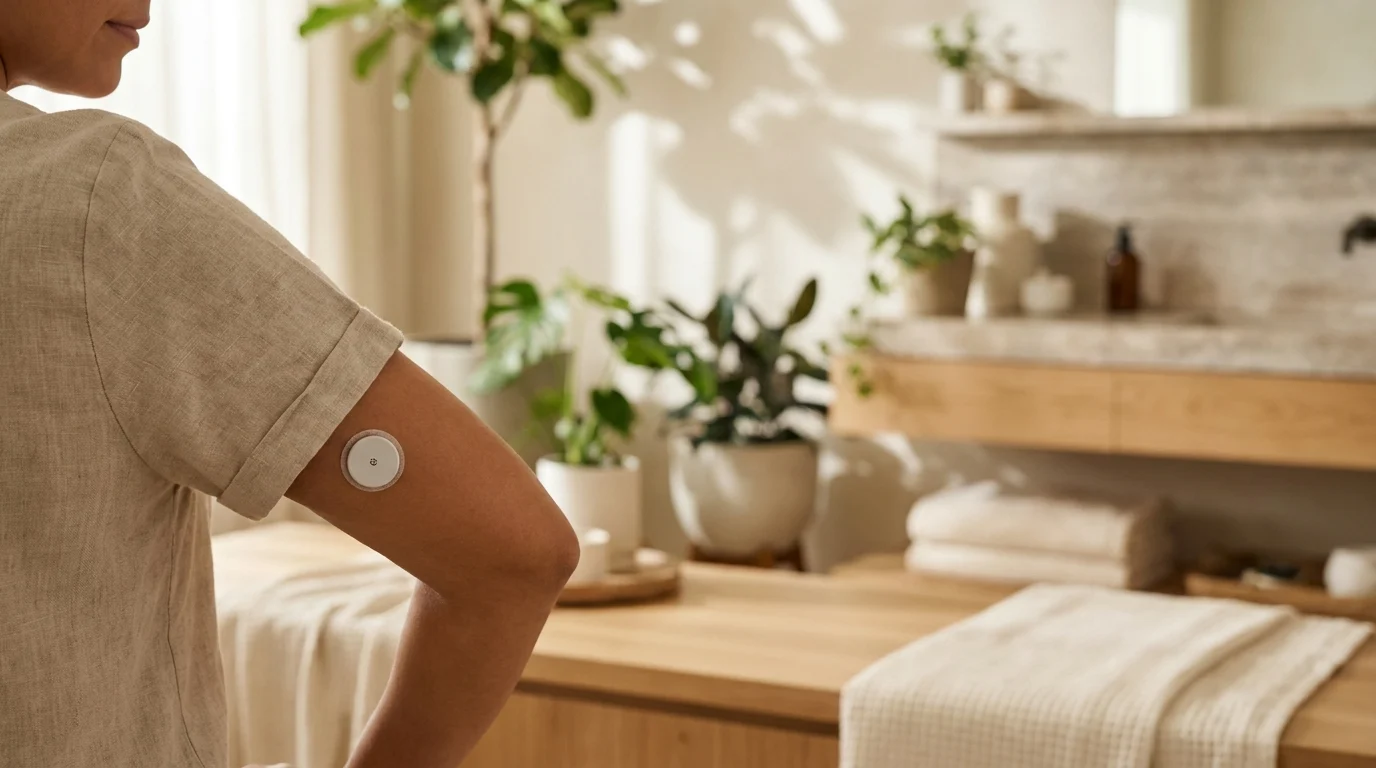
A continuous glucose monitor is a small, skin-worn sensor that tracks your blood sugar around the clock and streams the readings to your phone, and it has quietly become one of the more interesting self-experimentation tools in the longevity space. If you are metabolically healthy and not diabetic, you might reasonably ask why you would wear one at all. The short answer is that glucose is a window into how your diet, sleep, stress, and movement interact in real time — and that window is largely invisible on a single fasting lab draw. A continuous glucose monitor lets a curious, proactive person see their own patterns rather than guess at them, which is why it has found a home alongside other longevity-minded diagnostics.
This article covers how the technology works, what the data can and cannot tell you, and how to turn the numbers into small, sustainable changes. It is written for the non-diabetic reader who wants to understand metabolic health, not for diabetes management, which is a different clinical conversation.
How a continuous glucose monitor works
A CGM uses a tiny filament inserted just under the skin, usually on the back of the upper arm. It does not measure blood directly; instead it samples glucose in the interstitial fluid surrounding your cells and estimates blood glucose from it (1). A typical sensor is worn for around 10 to 14 days, takes a reading every few minutes, and sends a continuous trace to an app.
Because it samples interstitial fluid, there is a short lag — often cited around 5 to 15 minutes — between what the sensor reports and what a fingerstick would show, especially when glucose is moving quickly (1). That lag matters less for the non-diabetic goal here, which is spotting trends rather than chasing a single precise number. What you gain in return is something a lab draw cannot offer: hundreds of data points a day that reveal the shape of your glucose curve, not just one snapshot.
What glucose spikes and variability reveal
A single fasting glucose value is a still photograph. A continuous glucose monitor is the full movie. The two metrics worth understanding are the post-meal spike (how high and how fast glucose rises after eating) and glucose variability (how much your readings swing across the day).
Large, frequent glucose spikes followed by sharp crashes are thought by many researchers to reflect, in part, how efficiently your body handles a given carbohydrate load — which ties back to insulin sensitivity (2). When cells respond well to insulin, glucose tends to rise modestly and return to baseline smoothly. When insulin sensitivity is reduced, the same meal may produce a higher peak and a slower return. Note the hedge here: a CGM cannot measure insulin, so these are inferences, not proof. They are best read as hypotheses to confirm with bloodwork.
Lower overall variability and a comfortable amount of “time in range” are generally associated with better metabolic health in the research literature, though optimal targets for healthy non-diabetics are still an area of active study (2). The practical takeaway is directional: smoother, lower curves are usually the goal, and the CGM shows which of your habits move you toward or away from that.
General orientation ranges
The table below offers rough orientation points commonly cited for non-diabetic adults. Treat these as a frame of reference for reading your own trace, not as personal medical thresholds — your clinician interprets your numbers in context.
| Metric | General orientation range | What it loosely reflects |
|---|---|---|
| Fasting glucose | ~70–99 mg/dL | Baseline overnight glucose |
| Post-meal peak (1–2 hrs) | generally under ~140 mg/dL | Response to a given meal |
| Daily average | ~lower-to-mid 100s mg/dL | Overall glucose exposure |
| Time in range | majority of the day in a tight band | Stability and variability |
These figures are drawn from general wellness references (3) and will not match every individual or lab. The value of a CGM is less about hitting a universal number and more about understanding your curve.
Individual food responses: the most useful finding
Perhaps the most eye-opening thing a continuous glucose monitor reveals is that glucose responses are highly individual. Research has shown that two people can eat the identical meal and produce strikingly different glucose curves, shaped by factors like the gut microbiome, body composition, sleep, and activity (2). The food that spikes your friend may barely move you, and vice versa.
This is why generic “good food / bad food” lists only get you so far. A CGM lets you run your own small experiments: eat your usual breakfast, watch the curve, then test a modified version and compare. Over a couple of weeks you see which staple meals are gentle and which are sharp — a personalized map no population-level guideline can give you.
Turning data into action
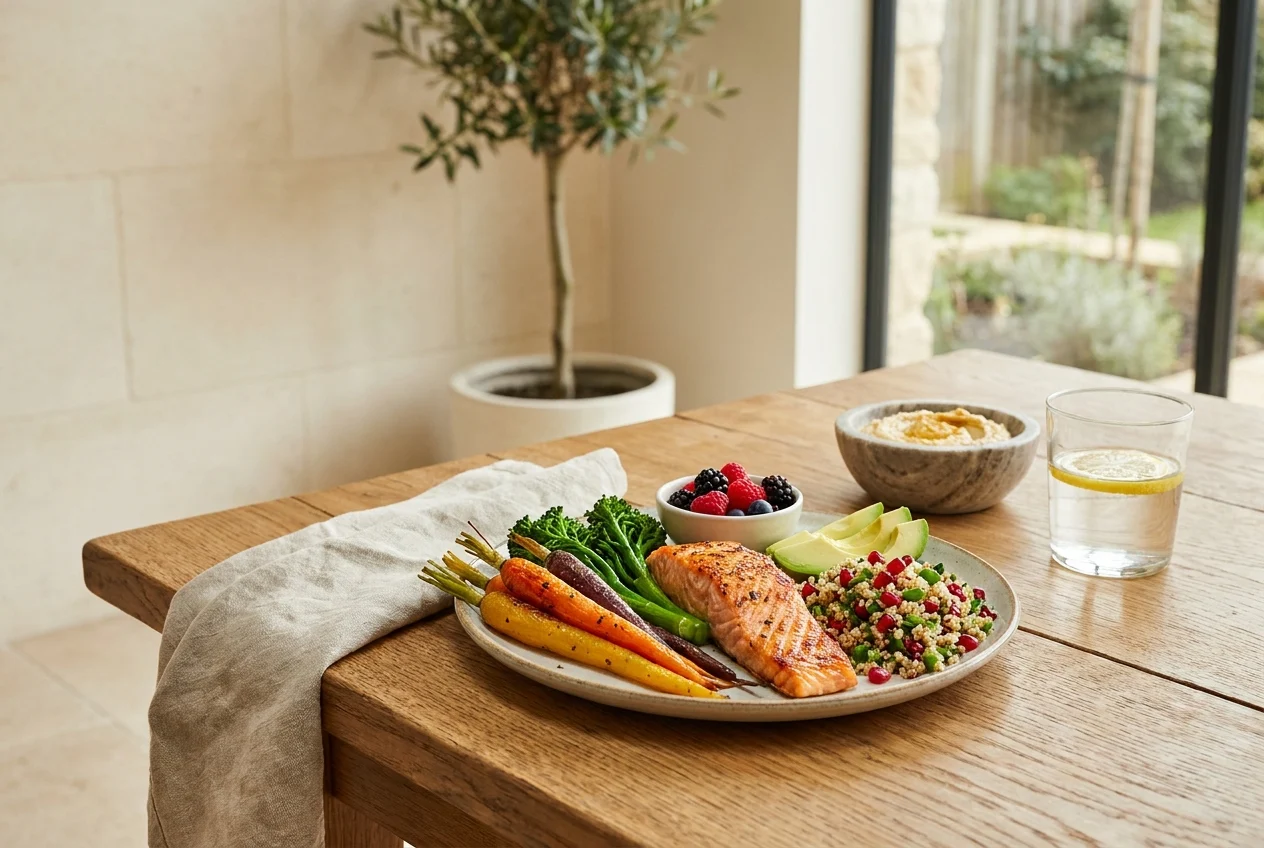
The point of wearing a sensor is not to admire the graphs — it is to find a few repeatable patterns you can act on. Several practical levers show up again and again:
- Pair carbohydrates with protein, fat, or fiber. Eating carbs alongside protein, healthy fat, or fibrous vegetables tends to blunt the rise compared with eating the same carbs alone (3). A piece of fruit with a handful of nuts often produces a gentler curve than the fruit by itself.
- Walk after meals. Light movement after eating — even a 10 to 15 minute walk — is frequently associated with a lower post-meal peak, because working muscle pulls glucose from the blood (3). Many CGM wearers find this is the single most visible change in their trace.
- Mind the order and the timing. Some people see smoother curves when vegetables and protein come before the starch, or when larger carbohydrate loads land earlier in the day rather than late at night.
- Watch sleep and stress. Poor sleep and acute stress can nudge glucose upward even without food, which a CGM makes visible and which is easy to miss otherwise.
None of these are dramatic interventions. They are small, sustainable nudges — and seeing the immediate feedback on your own sensor tends to make them stick far better than reading about them.
The limits: a tool, not a diagnosis
It is worth being clear-eyed about what a continuous glucose monitor is not. It is not a diagnostic device for non-diabetics, and a worrying-looking spike on the app is not a diagnosis. Sensor readings carry a margin of error, can be thrown off by pressure during sleep or sensor placement, and lag real-time blood glucose (1). Anxiety about every transient bump is a real downside some users report, and over-restricting your diet to flatten a graph can be counterproductive.
The data is also only as useful as the interpretation around it. A CGM shows glucose; it says nothing directly about insulin, which is doing the work behind the scenes. That is why this kind of self-experimentation is most valuable when it sits alongside proper bloodwork rather than replacing it.
Tying it back to fasting insulin and metabolic markers

If a CGM is the movie, your labs are the underlying biology. The most informative pairing is a continuous glucose monitor trace reviewed next to fasting glucose, fasting insulin, HbA1c, and a lipid panel. Fasting insulin in particular often flags reduced insulin sensitivity earlier than fasting glucose does, because the body can hold glucose in range for years by quietly producing more insulin (2). A CGM that shows large spikes plus a fasting insulin that is creeping up tells a more complete story than either alone.
This is the logic behind running a CGM as part of a broader workup rather than in isolation. At Rewind, we think about CGM data in the context of comprehensive diagnostic testing and an executive lab panel, so a glucose pattern can be checked against the actual biochemistry. For those building a longer-term plan, it can also inform a personalized longevity protocol rather than living as a standalone gadget.
If you are exploring related lifestyle levers, two of our other articles pair naturally with this one: intermittent fasting — should you try it, which looks at meal timing, and what your blood panel tells you, which covers how to read the lab markers a CGM should be interpreted against.
Who benefits most
A continuous glucose monitor tends to be most rewarding for the proactive, metabolically healthy person who wants to understand their own physiology — someone optimizing performance, managing weight, or simply curious about how their habits register in their body. It can be especially clarifying for people with a family history of metabolic issues who want an early, behavioral read long before anything shows up as a problem. It is less suited to anyone prone to health anxiety who might fixate on every reading, and it is not a substitute for medical evaluation when symptoms are present.
For most longevity-minded people, the ideal use is a defined two-to-four-week experiment, reviewed with someone who can connect the trace to your bloodwork — then a few durable habit changes, with the sensor retired until the next check-in.
If you would like to interpret your own glucose patterns alongside fasting insulin and a full metabolic panel, our team in Miami can help you set up and read a CGM as part of a structured metabolic consult. It is a low-friction way to turn curiosity into a plan grounded in your actual numbers.
This article is for general educational purposes and does not constitute medical advice; please consult a qualified clinician before making changes to your diet, exercise, or health routine.
Sources
- Diabetes Technology Society / U.S. Food and Drug Administration. General overviews of continuous glucose monitoring technology, interstitial sampling, and sensor lag.
- Peer-reviewed metabolic research on individual glycemic responses, glucose variability, and insulin sensitivity (e.g., personalized nutrition and glycemic-response studies published in clinical journals).
- General clinical and wellness references on post-meal glucose, carbohydrate pairing, and post-meal activity (e.g., American Diabetes Association and academic medical center patient education materials).
Frequently Asked Questions
Can non-diabetics use a CGM?
Yes. Many metabolically healthy people wear a continuous glucose monitor for one to several weeks to learn how their body responds to specific foods, meal timing, exercise, sleep, and stress. It is used as an educational and self-experimentation tool rather than as a diagnostic device in this context.
What is a normal glucose range on a CGM?
Ranges vary by individual and lab reference, but many sources describe fasting readings roughly in the 70–99 mg/dL band, post-meal peaks generally staying under about 140 mg/dL, and a daily average that tends to settle in the lower-to-mid 100s. These are general orientation points, not personal medical cutoffs.
How long should I wear a continuous glucose monitor?
Two to four weeks is a common starting window. That is usually long enough to capture your typical meals, a few social or restaurant situations, workouts, and a range of sleep nights, which is where the most useful patterns tend to show up.
Does a glucose spike mean something is wrong?
Not necessarily. A single post-meal rise is expected and normal. The patterns that may warrant attention are very large repeated spikes, slow returns to baseline, or readings that stay elevated overnight. Interpretation should happen alongside bloodwork and a clinician, not from the app alone.
Do I need a prescription for a CGM?
Historically most continuous glucose monitors required a prescription, though over-the-counter wellness sensors have become available in some markets. Availability and regulations change, so it is worth confirming current options with a clinician.
How does a CGM connect to my other lab work?
A CGM shows real-time glucose behavior, while fasting glucose, fasting insulin, HbA1c, and a lipid panel give the underlying biochemistry. Reviewed together, they paint a fuller picture of insulin sensitivity and metabolic health than either does alone.
More in wellness
The Rewind Anti-Aging Story: Why We Built This Clinic
The Rewind Anti-Aging story starts with a failing engineer in his mid-40s — and the gap in care that turned a personal fix into a Miami practice.
wellnessSnowbird Wellness Miami: Care That Travels With You
How seasonal residents keep hormone therapy, labs, and longevity care continuous across two states — and what to set up before you fly south or north.
wellnessLongevity Clinic Miami: What to Expect and How to Choose
A longevity clinic Miami guide: what a real workup measures, how long results take, what pricing looks like, and the four questions that sort medicine from marketing.
⚕ Medical Disclaimer
The information on this page is for educational purposes only and does not constitute medical advice, diagnosis, or treatment. All treatments at Rewind Anti-Aging of Miami are performed under the supervision of licensed medical professionals. Individual results may vary. Consult your physician before beginning any new treatment protocol.
Meet our clinical team →Not sure which treatment is right for you?
Take our free 2-minute assessment and get a personalized recommendation.
Areas We Serve in Miami & South Florida
Our clinic at 24 NW 29th Street is in Wynwood & Midtown, minutes from Edgewater and Brickell. We also care for patients across Coral Gables, Aventura, Key Biscayne, and Doral — plus the entire state of Florida via telehealth.
Take the Next Step
Our team at Rewind Anti-Aging in Miami is here to help you determine if diagnostic testing is right for your goals.