
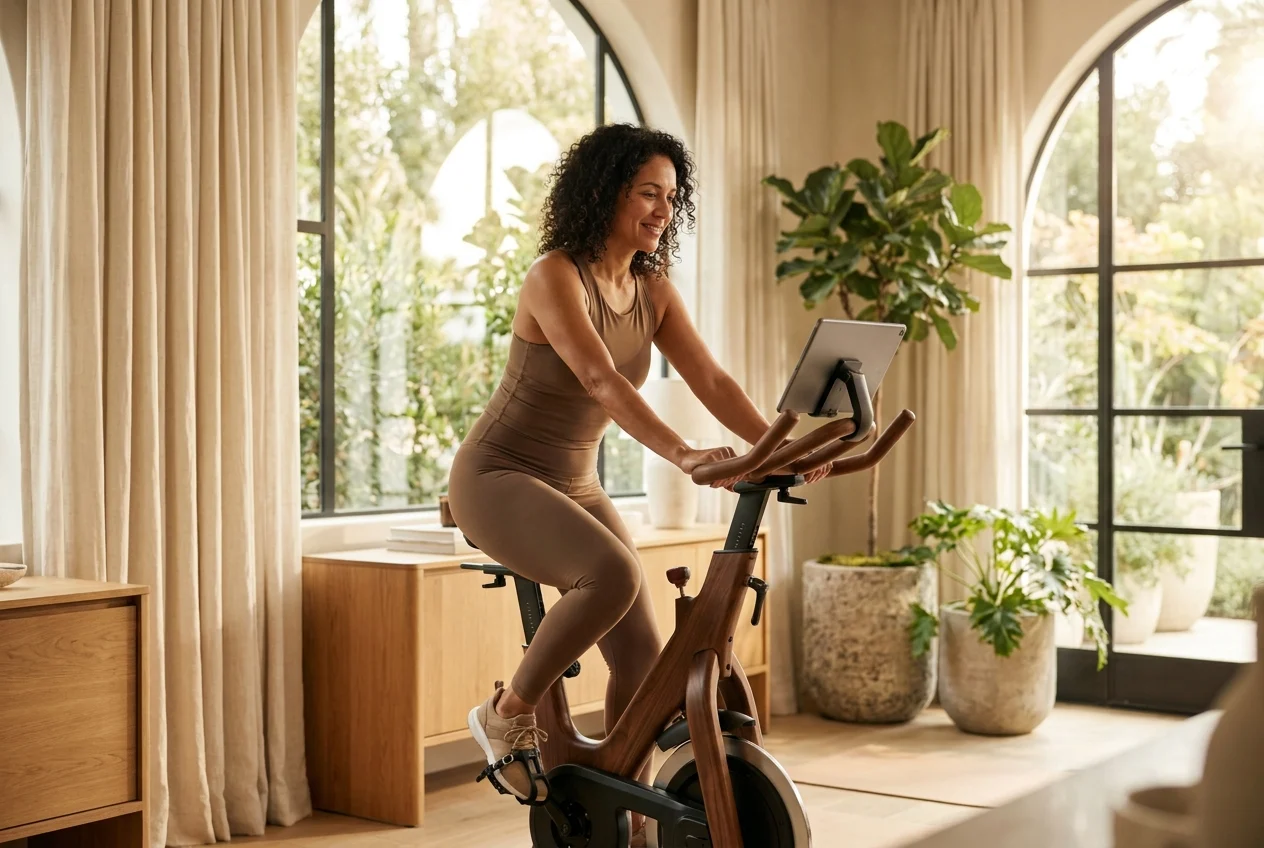
Zone 2 cardio is low-intensity aerobic exercise performed at a conversational pace — easy enough that you can talk in full sentences, but steady enough to keep your heart working. It matters because this gentle, sustainable effort may be one of the most efficient ways to train the cellular machinery behind energy, endurance, and metabolic health. Rather than chasing the burn of a hard workout, zone 2 training asks you to slow down and stay there, and a growing body of research suggests that this is precisely where some of the most durable adaptations for healthspan take root (1).
For a clinic focused on longevity, the appeal is straightforward. Zone 2 is accessible, low-injury, and repeatable week after week — and the qualities it appears to build, from mitochondrial density to metabolic flexibility, are the same ones that tend to decline with age.
What “Zone 2” Actually Means
Exercise intensity is often divided into five zones based on heart rate or perceived effort. Zone 1 is very light movement; zone 5 is all-out. Zone 2 sits near the bottom — roughly 60–70% of your maximum heart rate — in the range where your body relies heavily on aerobic metabolism and fat as fuel (2).
The defining feature of zone 2 is that it stays below your first lactate threshold. At this intensity, your muscles can clear lactate about as fast as they produce it, so the effort feels sustainable. Push harder and lactate starts to accumulate, breathing deepens, and you’ve left zone 2 behind. The skill, for most people, is learning to keep the effort genuinely easy — easier than instinct wants.
A simple zone reference
| Zone | Intensity | % of max HR | How it feels |
|---|---|---|---|
| Zone 1 | Very light | 50–60% | Easy stroll, fully recovered |
| Zone 2 | Light / aerobic | 60–70% | Conversational; can talk, not sing |
| Zone 3 | Moderate | 70–80% | Speech in short phrases |
| Zone 4 | Hard | 80–90% | Few words at a time |
| Zone 5 | Maximal | 90–100% | Cannot speak |
These percentages are estimates, not precise thresholds, and individual variation is wide. They’re a starting point to be refined with experience.
Why Zone 2 Cardio Builds Mitochondrial and Metabolic Health

Mitochondria are the energy factories inside your cells, and their number and quality help determine how well your body produces energy and handles fuel. Endurance exercise — particularly sustained, lower-intensity work — appears to stimulate mitochondrial biogenesis, the process by which cells build new mitochondria (1)(3). Over time, more and healthier mitochondria may translate into better stamina, more stable energy, and improved metabolic resilience.
Zone 2 is also where fat oxidation tends to peak. Because the intensity is low enough to stay aerobic, the body can draw a larger proportion of its fuel from fat rather than relying mostly on stored carbohydrate (2). Training this system repeatedly is thought to improve metabolic flexibility — the capacity to switch efficiently between burning fat and carbohydrate depending on availability and demand. Metabolic flexibility is increasingly viewed as a marker of metabolic health, and its loss is associated with insulin resistance and several age-related conditions (4).
None of this happens in a single session. The adaptations researchers describe accumulate over weeks and months of consistent, unhurried effort — which is part of why zone 2 rewards patience over intensity.
The Link to VO2 Max and Longevity
VO2 max — the maximum rate at which your body can use oxygen during exercise — is one of the more robust predictors of long-term health in the research literature. Observational studies suggest that higher cardiorespiratory fitness is associated with lower all-cause mortality, and the relationship appears to hold across age groups (5).
Zone 2 contributes to this picture by building the aerobic base that higher-intensity work is layered on top of. A larger, more efficient aerobic engine — more capillaries, more mitochondria, better fat metabolism — may support a higher ceiling for VO2 max when combined with occasional harder efforts. Many endurance programs follow a roughly 80/20 split: the majority of training at easy, zone 2 intensity, with a smaller portion at higher intensities. This structure is thought to develop the aerobic base while still nudging the upper end of fitness (6).
If you want to understand where your own ceiling sits today, a VO2 max test offers a direct measurement and a baseline to track against over time.
How to Find Your Zone 2

You don’t need a lab to get into the right ballpark. Several practical heuristics can point you toward zone 2:
- The talk test. This is the most accessible method. In zone 2 you can speak in complete sentences but would find singing uncomfortable. If you can chat easily, you’re in range; if you’re gasping, ease off.
- ~60–70% of max heart rate. A rough estimate of maximum heart rate is 220 minus your age, though this formula has meaningful error. Multiply that estimate by 0.60 and 0.70 to get a target band. A heart-rate monitor or chest strap makes this easier to hold.
- The MAF / “180 formula.” Popularized as a heuristic, this approach subtracts your age from 180 to set an approximate upper heart-rate limit for easy aerobic work, with adjustments downward for illness or limited training history and slightly upward for seasoned athletes. It’s one ceiling among several, not a rule.
Because heart rate responds to sleep, caffeine, heat, stress, and hydration, no single number is perfect. Miami’s heat in particular can drive heart rate up at the same effort, so pairing a number with the talk test tends to give the most reliable read. Tracking your resting metrics — including heart rate variability — can also add context on recovery and readiness from day to day.
How Much Zone 2 Cardio to Do
A common target is roughly 150–180 minutes per week, typically broken into three or four sessions of 30 to 60 minutes each (6). This sits comfortably alongside broad physical-activity guidelines and is enough volume for the repeated low-intensity stimulus that drives aerobic adaptation.
The mode matters less than the intensity. Brisk walking, easy cycling, the elliptical, rowing, swimming, or a light jog can all keep you in zone 2 — the goal is simply to hold a conversational effort for a meaningful stretch. Many people find that longer continuous sessions are easier to keep truly easy than short ones, where the temptation to push creeps in.
If you’re starting out, build gradually. Beginning with shorter sessions and adding time as your aerobic base develops is generally the prudent path, and it lowers the risk of overdoing it early.
Pairing Zone 2 with Strength Training

Zone 2 is powerful, but it isn’t complete on its own. Aerobic training does relatively little to preserve muscle mass and bone density — two things that tend to decline with age and that resistance training directly addresses. For this reason, most longevity frameworks treat zone 2 cardio and strength training as complementary pillars rather than competitors (5).
A practical structure many people use is to separate the two — strength on some days, zone 2 on others — or to place easy cardio and lifting far enough apart that neither blunts the other. The right balance depends on your goals, schedule, and starting fitness, and it’s worth mapping out deliberately rather than leaving to chance.
This kind of individualized plan — combining aerobic base work, strength, and the lab and biomarker context that surrounds them — is the backbone of our longevity protocol, which looks at how your training, hormones, and metabolic markers fit together rather than treating exercise in isolation.
Putting It Together
Zone 2 cardio is, in many ways, the unglamorous foundation of healthspan: easy enough to do consistently, gentle enough to recover from, and potentially meaningful enough at the cellular level to be worth protecting on a busy week. The evidence is still evolving, and individual responses vary, but the broad direction — that a strong aerobic base supports mitochondrial function, metabolic flexibility, and long-term fitness — is well supported and low risk to pursue.
If you’d like help building a personalized program around your fitness, labs, and goals, our team in Miami can help you put the pieces together. Consider booking a longevity consult at Rewind Anti-Aging of Miami to translate these principles into a plan built for you.
This article is for educational purposes only and is not medical advice. Consult a qualified clinician before beginning any new exercise program, especially if you have a cardiovascular or metabolic condition.
Sources
- Holloszy JO, Coyle EF. Adaptations of skeletal muscle to endurance exercise and their metabolic consequences. Journal of Applied Physiology.
- San-Millán I, Brooks GA. Assessment of metabolic flexibility by means of measuring blood lactate, fat, and carbohydrate oxidation responses to exercise. Sports Medicine.
- Hood DA, et al. Maintenance of skeletal muscle mitochondria in health, exercise, and aging. Annual Review of Physiology.
- Goodpaster BH, Sparks LM. Metabolic flexibility in health and disease. Cell Metabolism.
- Mandsager K, et al. Association of cardiorespiratory fitness with long-term mortality among adults undergoing exercise treadmill testing. JAMA Network Open.
- Seiler S. What is best practice for training intensity and duration distribution in endurance athletes? International Journal of Sports Physiology and Performance.
Frequently Asked Questions
How do I know if I'm in zone 2?
The simplest field check is the talk test: in zone 2 you can hold a conversation in full sentences but would struggle to sing. By heart rate, it usually falls around 60–70% of your estimated maximum. Breathing should feel slightly elevated but controlled, and you should be able to sustain the effort for an hour or more.
How much zone 2 cardio per week?
Many longevity-minded practitioners suggest roughly 150–180 minutes per week, often split into three or four sessions of 30–60 minutes. This aligns with general physical-activity guidelines and gives the body enough repeated low-intensity stimulus to support aerobic adaptations over time.
What heart rate is zone 2?
Zone 2 is commonly estimated at about 60–70% of maximum heart rate. The MAF or '180 formula' offers another heuristic: subtract your age from 180 and adjust for health and training status to set an approximate upper ceiling for easy aerobic work.
Can I do zone 2 cardio if I'm a beginner?
Yes. Zone 2 is intentionally low intensity, which makes it one of the more approachable ways to begin building an aerobic base. Beginners may find that even a brisk walk keeps them in range. Starting conservatively and progressing gradually is generally advised.
Does zone 2 cardio help with fat loss?
Zone 2 emphasizes fat oxidation, meaning the body draws a larger share of fuel from fat at this intensity. While it may support metabolic flexibility and energy balance, fat loss ultimately depends on overall diet, total activity, and consistency rather than any single workout type.
Should I combine zone 2 with strength training?
Most longevity frameworks pair the two. Zone 2 supports aerobic and metabolic health while resistance training preserves muscle and bone. Scheduling them on separate days, or strength after easy cardio, is a common approach worth discussing with a clinician.
More in wellness
The Rewind Anti-Aging Story: Why We Built This Clinic
The Rewind Anti-Aging story starts with a failing engineer in his mid-40s — and the gap in care that turned a personal fix into a Miami practice.
wellnessSnowbird Wellness Miami: Care That Travels With You
How seasonal residents keep hormone therapy, labs, and longevity care continuous across two states — and what to set up before you fly south or north.
wellnessLongevity Clinic Miami: What to Expect and How to Choose
A longevity clinic Miami guide: what a real workup measures, how long results take, what pricing looks like, and the four questions that sort medicine from marketing.
⚕ Medical Disclaimer
The information on this page is for educational purposes only and does not constitute medical advice, diagnosis, or treatment. All treatments at Rewind Anti-Aging of Miami are performed under the supervision of licensed medical professionals. Individual results may vary. Consult your physician before beginning any new treatment protocol.
Meet our clinical team →Not sure which treatment is right for you?
Take our free 2-minute assessment and get a personalized recommendation.
Areas We Serve in Miami & South Florida
Our clinic at 24 NW 29th Street is in Wynwood & Midtown, minutes from Edgewater and Brickell. We also care for patients across Coral Gables, Aventura, Key Biscayne, and Doral — plus the entire state of Florida via telehealth.
Take the Next Step
Our team at Rewind Anti-Aging in Miami is here to help you determine if the Rewind Longevity Protocol is right for your goals.